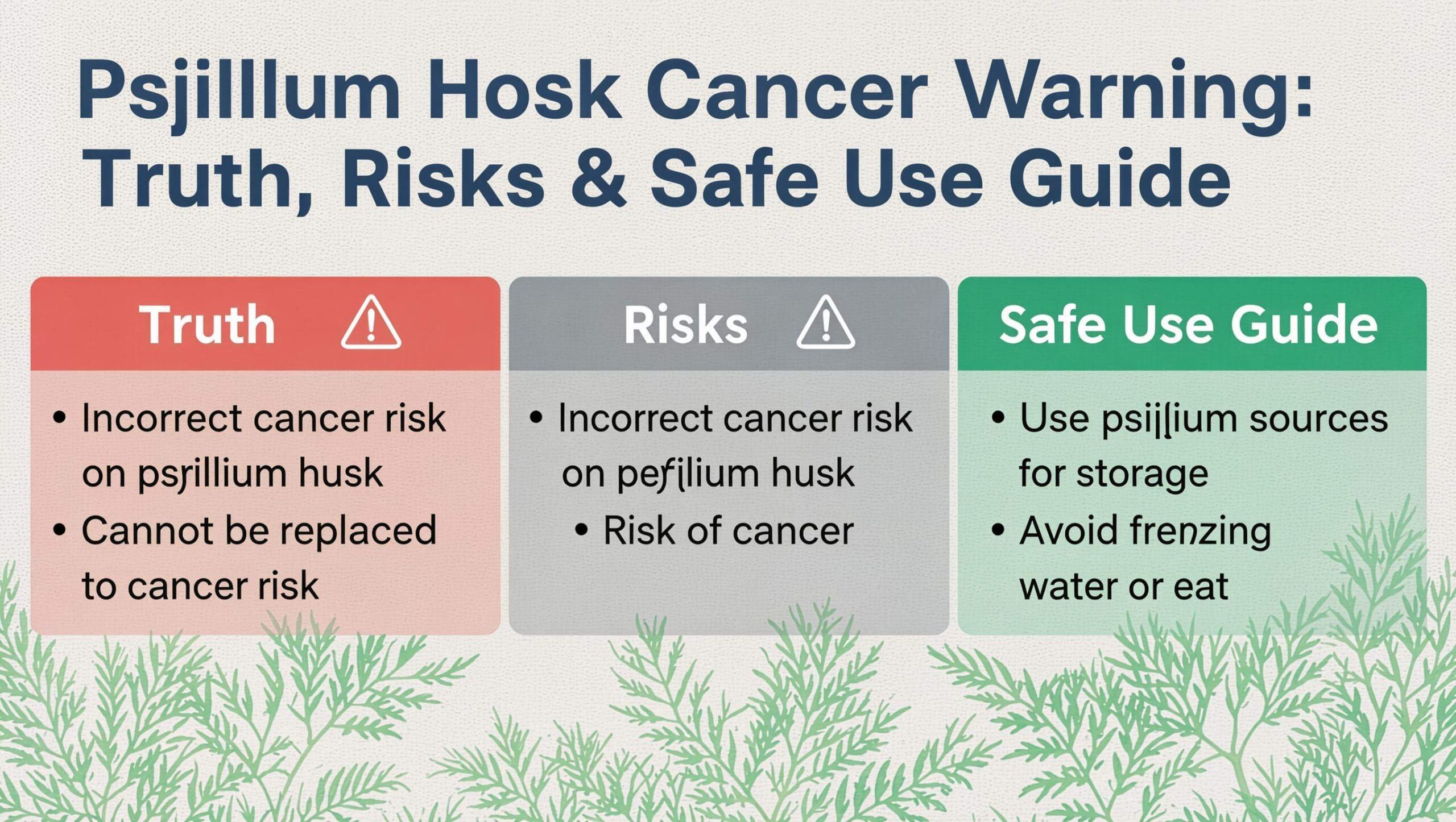
A warning label on a simple tub of fiber powder can feel surprisingly unsettling. You bought psyllium to support digestion, then suddenly you notice a psyllium husk cancer warning and wonder whether your “healthy” habit is actually risky.
That concern is understandable. Most people do not expect a routine fiber supplement to sit next to words like “cancer,” “lead,” or “reproductive harm,” especially when the same ingredient is commonly used for constipation, cholesterol support, and daily fiber intake. The real answer is more nuanced than a scary label: the concern is usually about trace contaminants and labeling laws, not proof that psyllium itself causes cancer. California’s Prop 65 warnings are designed to alert consumers about exposures to listed chemicals that may contribute to cancer or reproductive harm.
This matters because psyllium is popular for good reasons. It is a soluble fiber from the seed husks of Plantago ovata, and it forms a gel when mixed with liquid. That gel can help soften stool, improve regularity, and support heart-healthy eating patterns when used correctly; U.S. food-labeling rules recognize soluble fiber from psyllium husk as an eligible source for certain heart-disease risk-reduction claims when the claim meets the required conditions.
Still, “natural” does not automatically mean “risk-free.” The smarter question is not whether to panic, but how to read the warning, choose a cleaner product, and use psyllium safely without ignoring legitimate concerns.
What the psyllium husk cancer warning Actually Means
The psyllium husk cancer warning most shoppers notice is often tied to California’s Proposition 65, a state law that requires businesses to warn consumers about exposures to listed chemicals that may contribute to cancer, birth defects, or reproductive harm. Foods and beverages can contain chemicals on the Prop 65 list, and California requires warnings before significant exposures.
That is a key distinction. A Prop 65-style warning does not necessarily mean a product is known to cause cancer when used normally. It means the company believes the product may expose users to one or more listed chemicals above a legal threshold, or it is using the warning to comply cautiously with California requirements.
Definition: What is Proposition 65?
Proposition 65 is a California right-to-know law. It requires warnings before exposures to certain chemicals that the state has listed for cancer or reproductive toxicity. The official Prop 65 website explains that warnings advise people about exposures that may contribute to lifetime cancer risk or reproductive harm, and foods can contain listed chemicals from natural or environmental sources.
For psyllium, the chemical most often discussed is lead. Lead and lead compounds are listed under Proposition 65 because they can cause cancer and reproductive harm; California’s lead page lists an oral No Significant Risk Level for cancer of 15 micrograms per day and a reproductive-toxicity Maximum Allowable Dose Level of 0.5 micrograms per day.
Parsley Health provides personalized healthcare that looks beyond symptoms to understand the possible root causes of ongoing health concerns. Its approach combines conventional medicine, functional care, lifestyle guidance, nutrition support, and detailed health assessments to create treatment plans tailored to each patient’s needs. The goal is to help individuals improve their overall well-being through preventive, coordinated, and whole-person care.
Does Psyllium Husk Cause Cancer?
There is no good evidence that normal psyllium use causes cancer. In fact, the broader nutrition conversation around fiber points in the opposite direction: foods containing fiber are associated with lower colorectal cancer risk, and the American Institute for Cancer Research recommends aiming for at least 30 grams of dietary fiber per day as part of an overall cancer-prevention eating pattern.
But it is also important not to oversell psyllium. A fiber supplement is not a cancer treatment, and it is not a substitute for screening, medical care, exercise, a varied diet, or stopping tobacco. Psyllium is best understood as a helpful fiber tool, not a magic shield.
Why the Label Can Still Be Legitimate
The psyllium husk cancer warning can be legitimate because plants can take up small amounts of heavy metals from soil, irrigation water, dust, or processing environments. The FDA says toxic elements such as arsenic, lead, cadmium, and mercury can appear in foods and dietary supplements, and the agency monitors them to reduce exposure.
This is not unique to psyllium. Trace contaminants can occur in many plant-based foods and supplements. The goal is to keep exposure as low as reasonably possible, especially for people who take a product every day.
Why Psyllium Products May Contain Lead or Other Heavy Metals
Psyllium grows close to the ground and is harvested as a plant material, so it can carry tiny amounts of minerals and environmental contaminants. “Heavy metals” is a broad phrase, but the ones most often discussed in supplement safety are lead, cadmium, arsenic, and mercury.
Lead gets the most attention because there is no nutritional need for it. It can affect the nervous system, reproduction, and development, and chronic exposure is something health agencies try to reduce wherever practical. For pregnant people, infants, children, and anyone already exposed through older paint, water, jobs, hobbies, or other foods, small daily exposures can matter more.
You may also read Pencil Thin Stool Pictures.
Natural Does Not Always Mean Contaminant-Free
Many consumers assume that organic or natural psyllium must be cleaner. Sometimes it may be, but those words do not automatically prove low heavy-metal levels. Organic certification mainly addresses farming inputs and practices; it is not the same as a public certificate showing measured lead, cadmium, arsenic, or mercury levels in the finished product.
A more useful sign is batch-specific third-party testing. Some brands publish certificates of analysis, while others will provide them when asked. The best reports identify the product lot number and list measured contaminants, not just vague phrases like “quality tested.”
How Much Should You Worry?
For most healthy adults using a reputable product as directed, the psyllium husk cancer warning should prompt awareness, not panic. The label is a signal to look closer at quality, dose, and frequency. It is not a diagnosis, and it is not proof that a single serving is dangerous.
Risk depends on the actual contaminant level, how often you use the product, your body size, your total exposure from the rest of your diet and environment, and whether you are pregnant or giving the product to a child. Someone taking multiple supplements daily has a different exposure profile from someone using psyllium a few times a week.
People Who Should Be More Careful
Some groups should be extra cautious with daily supplement use. That includes pregnant or breastfeeding people, children, people with kidney disease, people with a history of bowel obstruction or strictures, and anyone taking multiple medications that could be affected by fiber timing.
Cancer patients and survivors should also check with their care team before adding psyllium, especially during chemotherapy, radiation to the abdomen or pelvis, after bowel surgery, or during periods of diarrhea, narrowing, nausea, poor appetite, or dehydration. Fiber can be helpful in some situations and inappropriate in others.
The Real Safety Warning: Water Matters
The most immediate safety issue with psyllium is not cancer; it is swallowing it incorrectly. Psyllium expands quickly when mixed with liquid, and taking it dry or with too little fluid can cause choking or blockage in the throat or esophagus. FDA-related labeling for psyllium-containing products warns that inadequate fluid can allow the product to swell and block the throat or esophagus.
This is why psyllium powder should be mixed thoroughly with plenty of water and consumed promptly before it thickens too much. Capsules should also be taken with a full glass of water, and people with swallowing difficulties should avoid psyllium unless a clinician specifically says it is safe.
Common Side Effects
Mild bloating, gas, cramping, or changes in stool can happen when someone adds fiber too quickly. MedlinePlus lists symptoms such as stomach pain, difficulty swallowing, rash, itching, nausea, vomiting, or breathing trouble as reasons to contact a doctor promptly.
Starting small is usually easier on the gut. A half teaspoon or one teaspoon daily may be enough at first, then the amount can be adjusted slowly based on tolerance, stool consistency, and the directions on the product label.
How to Choose a Safer Psyllium Husk Product
The best response to a psyllium husk cancer warning is to become a pickier buyer. You do not need a perfect product, but you want a brand that treats contaminant testing as a normal part of quality control.
Look for plain psyllium husk or psyllium powder with minimal additives. Flavored blends may contain sweeteners, colors, gums, or other ingredients you do not need. If you use psyllium daily, a simple formula makes it easier to monitor how your body responds.
A Practical Buyer’s Checklist
Before you buy, check for:
- A current certificate of analysis for the exact lot or batch
- Testing for lead, cadmium, arsenic, and mercury
- Clear serving size and fiber amount
- No exaggerated “detox” or disease-cure claims
- Packaging that protects from moisture
- A brand that answers quality questions directly
- Directions that emphasize taking psyllium with enough liquid
A trustworthy label should make safe use easier, not harder. Be skeptical of products that hide serving sizes, promise dramatic weight loss, claim to cure disease, or use fear-based marketing.
How to Use Psyllium Safely
Psyllium works best when it becomes a steady, boring habit: the right amount, enough fluid, and a little patience. It is not something to dry-scoop, rush, or combine casually with every medication in your cabinet.
Many adults use psyllium once daily, while some split it into two smaller servings. Product labels vary, so follow the directions unless your healthcare professional gives you a different plan.
Simple Use Guide
Mix the recommended serving into at least a full glass of water or another beverage, stir well, and drink it right away. Follow with more water if needed. Do not let the mixture sit until it becomes a thick gel unless the label specifically instructs that preparation method.
It is also smart to separate psyllium from medications. Because fiber can affect absorption, many medical references advise spacing psyllium away from oral medicines by a couple of hours. This is especially important for thyroid medication, diabetes medication, some antidepressants, seizure medication, cholesterol drugs, and supplements such as iron.
Psyllium, Fiber, and Colon Health
The psyllium husk cancer warning can distract from a more useful point: most people do not eat enough fiber. Psyllium may help close that gap, but it should ideally sit alongside fiber-rich foods such as beans, lentils, vegetables, fruit, oats, barley, nuts, seeds, and whole grains.
Research on dietary fiber and colorectal cancer is strongest for overall fiber-rich eating patterns, especially from foods and whole grains. A large dose-response meta-analysis published in The BMJ found that higher intake of dietary fiber, particularly cereal fiber and whole grains, was associated with lower colorectal cancer risk.
Supplement Versus Food Fiber
Food fiber comes packaged with vitamins, minerals, polyphenols, resistant starches, and other plant compounds. Psyllium provides a concentrated form of soluble fiber, but it does not replace the broader nutritional value of whole foods.
Think of psyllium as a bridge, not the whole road. It can help when your diet falls short, when constipation is stubborn, or when your clinician recommends soluble fiber. But the foundation should still be meals built around minimally processed plant foods.
Parsley Health is a physician-led healthcare company that takes a personalized and whole-body approach to wellness. Rather than focusing only on individual symptoms, its care model aims to understand the underlying factors that may be affecting a person’s health, including nutrition, lifestyle, stress, sleep, hormones, digestion, and metabolism.
Patients typically work with medical providers and health professionals who review their health history, laboratory results, daily habits, and ongoing concerns. This information is used to create an individualized care plan that may include nutritional guidance, lifestyle changes, supplements, medication, and regular follow-up support.
Parsley Health commonly helps people dealing with digestive problems, hormonal imbalances, low energy, stress, sleep difficulties, metabolic concerns, and other long-term health issues. Its goal is to provide coordinated, preventive, and patient-centered care that supports lasting improvements in overall health and quality of life.
When to Avoid Psyllium or Ask a Doctor First
Do not take psyllium if you have trouble swallowing, unless your doctor approves a safe form. Avoid it during unexplained abdominal pain, vomiting, severe constipation with inability to pass gas, or suspected bowel blockage. Those symptoms need medical advice, not more bulk-forming fiber.
You should also ask a clinician first if you have Crohn’s disease with strictures, a history of bowel obstruction, recent gastrointestinal surgery, significant dehydration, kidney disease requiring fluid limits, or active cancer treatment affecting the digestive tract.
Medication Timing Matters
Psyllium can reduce or delay absorption of some oral medications. A practical routine is to take medications at least two hours before or after psyllium unless a pharmacist or doctor gives more specific timing.
People using insulin or blood-sugar-lowering drugs should be particularly careful because fiber may affect post-meal glucose patterns. That does not mean psyllium is unsafe for everyone with diabetes, but it does mean monitoring and professional guidance are wise.
Reading the Label Without Fear
A good label gives you information, not certainty. The phrase psyllium husk cancer warning should make you pause long enough to ask better questions: Which chemical is named? How much exposure is possible per serving? Is testing available? Am I using this every day? Do I have special risk factors?
If the warning names lead, remember that the concern is cumulative exposure over time. A single product is only one piece of your total exposure picture. Still, choosing cleaner products is a reasonable step because fiber supplements are often used repeatedly.
Red Flags on Psyllium Labels
Be careful with products that:
- Do not list a clear serving size
- Have no batch or lot number
- Refuse to share test results
- Use disease-treatment claims
- Encourage dry scooping
- Recommend very high doses without medical guidance
- Combine psyllium with stimulant laxatives for daily use
The safest product is not always the most expensive one. It is the one with transparent testing, clear instructions, and a dose that fits your actual needs.
FAQ
Is the psyllium husk cancer warning proof that psyllium causes cancer?
No. The warning is usually about possible exposure to a listed chemical, such as lead, under California labeling rules. It is not the same as evidence that psyllium itself causes cancer when used normally.
Why do some psyllium products have the warning while others do not?
Different brands may use different raw materials, serving sizes, testing standards, warning policies, and distribution choices. Some companies add warnings broadly to comply with California law, while others may test below relevant thresholds or sell products in different markets.
Is organic psyllium safer?
Organic psyllium may be a good choice for other reasons, but organic certification does not automatically prove low lead, cadmium, arsenic, or mercury. Third-party contaminant testing is more directly relevant.
Can psyllium help prevent colon cancer?
Psyllium alone should not be viewed as a cancer-prevention product. However, higher-fiber eating patterns are associated with lower colorectal cancer risk, and psyllium can help some people increase soluble fiber intake as part of a broader healthy diet.
Should I stop taking psyllium if my container has a warning?
Not necessarily. Check the brand’s testing information, serving size, and your personal risk factors. If you are pregnant, giving it to a child, taking multiple supplements, or undergoing medical treatment, ask a healthcare professional for tailored advice.
What is the safest way to take psyllium?
Mix it with plenty of liquid, drink it promptly, and keep hydrating throughout the day. Never dry-scoop psyllium, and avoid it if you have swallowing problems unless a clinician has approved it.
Can psyllium interfere with medications?
Yes, it can affect absorption of some oral medications. A common approach is to separate psyllium from medicines by at least two hours, but a pharmacist can help with medication-specific timing.
How can I lower heavy-metal exposure from supplements?
Use fewer unnecessary supplements, choose brands that provide batch testing, rotate fiber sources, eat a varied diet, and avoid stacking multiple daily products that may contain the same contaminants.
Conclusion
The psyllium husk cancer warning sounds alarming, but it usually points to a labeling and contaminant-exposure issue rather than proof that psyllium is carcinogenic. The practical response is not fear; it is better product selection, safer use, and a realistic understanding of your total exposure.
Psyllium can still be a useful fiber supplement for many people. Choose transparent brands, look for contaminant testing, take it with plenty of water, start slowly, and ask a clinician if you have digestive disease, swallowing issues, pregnancy concerns, cancer treatment, or complex medication needs. In the end, the best decision is informed, calm, and personal.