It is a strange moment when something as ordinary as a bathroom visit suddenly makes you pause. Many people search for pencil thin stool pictures because they want to know whether what they just noticed is normal, temporary, or a sign that something deserves medical attention.
The honest answer is reassuring and practical: one narrow bowel movement by itself is often not an emergency, but a new, repeated change in stool shape should not be ignored. Stool shape can shift with constipation, diet, hydration, stress, irritable bowel syndrome, pelvic floor tension, or a temporary change in how the bowel is moving. It can also, less commonly, point to narrowing inside the colon or rectum, especially when it comes with bleeding, pain, unexplained weight loss, or a lasting change in bowel habits. Mayo Clinic notes that narrow stools that happen once in a while are probably harmless, while persistent pencil-thin stools can sometimes reflect narrowing or blockage.
The goal here is not to scare you or diagnose you through a screen. It is to help you look at stool shape in context: what counts as thin, what pictures can and cannot tell you, which symptoms matter most, and when it is wise to call a healthcare professional.
What Does Pencil-Thin Stool Mean?
A pencil-thin stool is a bowel movement that looks unusually narrow compared with your normal pattern. Some people describe it as stringy, ribbon-like, flat, rope-like, or as thin as a pencil. The key phrase is “compared with your normal,” because bowel habits vary widely from person to person.
A single thin stool can happen for simple reasons. Stool may look narrower if you are constipated and passing small amounts, if you strain, if the anal muscles are tight, or if the stool is soft enough to be squeezed into a thinner shape on the way out. The Bristol Stool Chart is often used to describe stool form: types 3 and 4 are generally considered the most ideal, while types 1 and 2 suggest constipation and type 7 is watery diarrhea.
The concern rises when thin stool is new, repeated, and not explained by a temporary change. A stool that keeps becoming narrower over days or weeks may suggest that something is affecting how stool moves through the lower bowel. That “something” may still be benign, but it is worth discussing with a clinician if the pattern continues.
How pencil thin stool pictures Can Help You Compare Changes
Clear pencil thin stool pictures can help you describe what you are seeing more accurately. They can make it easier to tell the difference between a stool that is simply smaller because you are constipated and a stool that is consistently narrow, flattened, or ribbon-like.
Pictures are most useful when they are treated as a comparison tool, not as a diagnosis. A photo cannot show what is happening inside the colon. It cannot tell whether narrowing is caused by muscle tension, constipation, inflammation, a stricture, a polyp, a tumor, or another issue. It can only document appearance.
When looking at images, pay attention to four details: width, length, consistency, and whether the change keeps happening. A thin stool that is also hard and pebble-like points more toward constipation. A thin stool that is soft, frequent, and linked with cramping may fit an irritable bowel pattern for some people. A thin stool that is accompanied by blood, black color, worsening abdominal pain, or weight loss needs more urgency.
What pencil thin stool pictures Can and Cannot Show
pencil thin stool pictures can show shape, surface texture, color, and sometimes visible blood or mucus. They may help you explain your concern to a doctor without relying on vague phrases like “weird” or “not normal.”
They cannot confirm colon cancer, inflammatory bowel disease, hemorrhoids, fissures, a blockage, or IBS. Those possibilities require a medical history, physical exam, and sometimes lab tests, stool tests, imaging, colonoscopy, or other evaluation depending on your symptoms and risk factors.
Common Causes of Thin or Narrow Stool
Thin stool is a sign, not a diagnosis. That means the same appearance can come from several different causes. Some are everyday digestive issues; others need prompt evaluation.
Constipation and Straining
Constipation is one of the most common explanations for smaller or narrower stool. When stool moves slowly through the colon, it can become harder, drier, and more difficult to pass. You may pass only a small amount at a time, and the stool may look thin simply because the bowel is not emptying smoothly.
Signs that constipation may be part of the picture include straining, bloating, hard lumps, feeling like you did not fully empty, or going less often than usual. Low fluid intake, low fiber intake, travel, inactivity, certain medications, and ignoring the urge to go can all contribute.
Irritable Bowel Syndrome
Irritable bowel syndrome, or IBS, can change stool size, shape, and consistency. Mayo Clinic notes that IBS may cause stools to be smaller, larger, or narrower than usual, along with changes in consistency. IBS commonly involves abdominal discomfort, bloating, constipation, diarrhea, or a mix of both.
IBS is real and uncomfortable, but it does not explain every bowel change. If your symptoms are new, persistent, or paired with bleeding, anemia, fever, nighttime diarrhea, or weight loss, it is important not to assume it is “just IBS.”
Hemorrhoids, Anal Fissures, and Rectal Discomfort
Pain around the anus can change how you pass stool. If you have a fissure, hemorrhoid flare, or irritation, you may tense your pelvic floor, hold back, or pass smaller amounts. That can make stool look narrower or incomplete.
Bright red blood on toilet paper often comes from hemorrhoids or fissures, but it should still be taken seriously when it is new, recurrent, or mixed into the stool. The American Cancer Society lists rectal bleeding and blood in the stool among symptoms that can occur with colorectal cancer, so repeated bleeding deserves a medical conversation even when hemorrhoids seem likely.
Pelvic Floor Tightness
The pelvic floor muscles help control bowel movements. When these muscles do not relax well, stool may be difficult to pass or may come out in smaller, thinner pieces. People may feel blocked, strain often, or feel as if they still need to go after finishing.
This is one reason pictures alone can be misleading. The stool may look alarming, while the root problem is actually coordination of the muscles involved in bowel emptying. A clinician can help decide whether pelvic floor therapy, constipation treatment, or further testing is appropriate.
Inflammation, Scar Tissue, or Strictures
A stricture is a narrowing in part of the intestine. Cleveland Clinic describes a colon stricture as a narrowing of the large intestine that can slow or block bowel movement, and notes that strictures are often associated with inflammatory bowel disease or colon cancer.
A stricture may cause cramping, bloating, constipation, narrow stool, or trouble passing gas. Severe symptoms such as vomiting, a swollen abdomen, intense pain, or inability to pass stool or gas can signal a possible obstruction and need urgent medical care.
Polyps or Colorectal Cancer
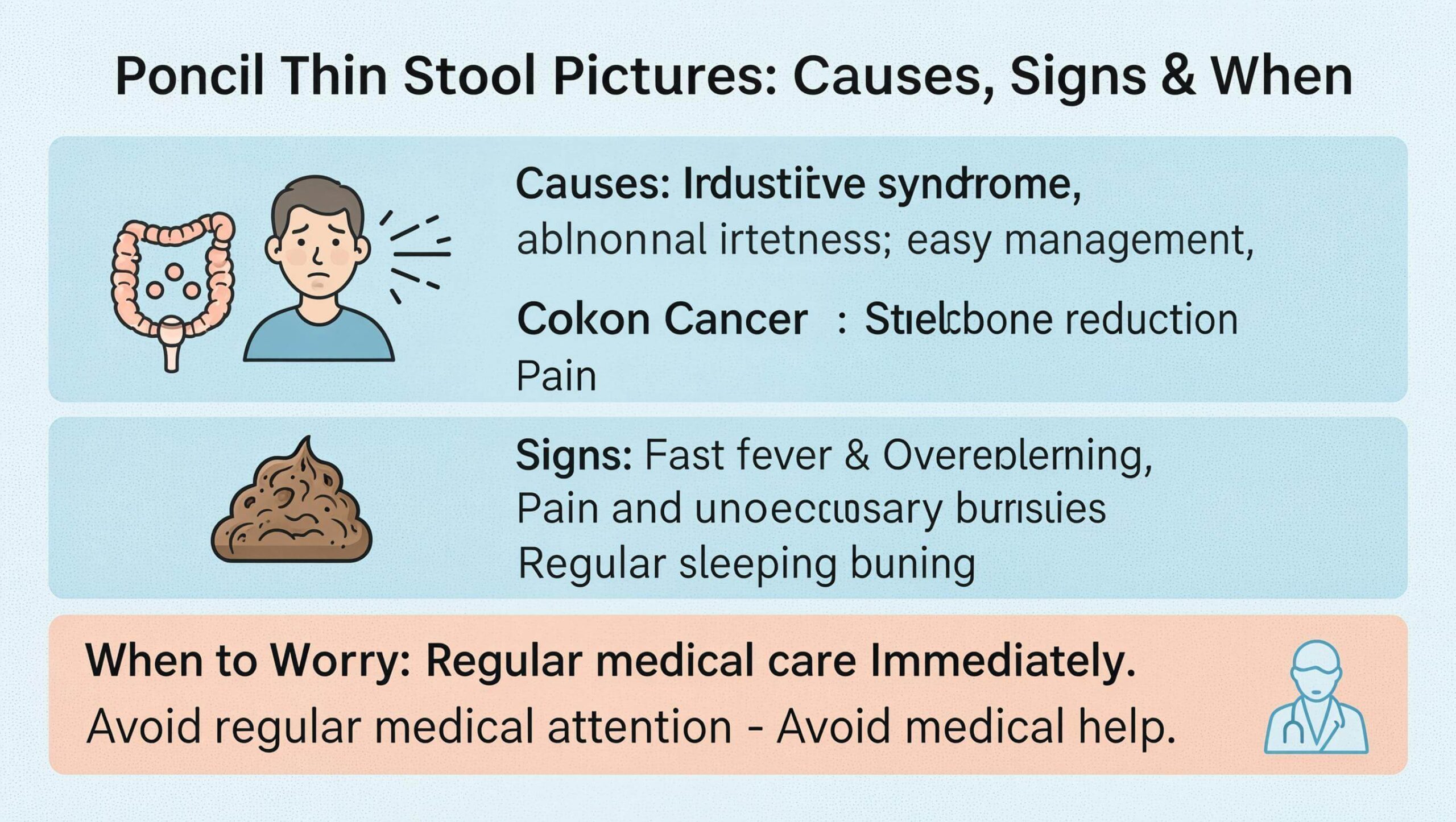
This is the worry that brings many people to search for pencil thin stool pictures. It is true that narrowing of stool can appear on colorectal cancer symptom lists, especially when a growth narrows the passage. The American Cancer Society includes a lasting change in bowel habits, including narrowing of the stool, among possible colorectal cancer symptoms.
However, thin stool alone does not automatically mean cancer. The more concerning pattern is a new and persistent change, especially with rectal bleeding, dark or black stool, abdominal pain, fatigue, weakness, unexplained weight loss, or a feeling that the bowel does not empty completely. These are the kinds of symptoms that should move the issue from “watch and wait” to “schedule an appointment.”
When Thin Stool Is Probably Less Concerning
It is reasonable to feel uneasy when your stool looks different, but not every change needs panic. A one-time narrow stool after a day of low fiber, dehydration, travel, stress, or holding in a bowel movement is usually less concerning.
You can often observe for a short time if you feel well otherwise, have no blood, no severe pain, no fever, no unexplained weight loss, and the stool returns to your usual pattern. During that time, focus on gentle basics: drink fluids, eat fiber-containing foods, move your body, and avoid excessive straining.
It also helps to compare shape over several bowel movements rather than judging one trip to the bathroom. Your digestive tract is not a machine. Meals, sleep, stress, menstrual cycles, medications, and routine changes can all affect stool.
You must read out: Am I Having A Heart Attack Female: Signs.
Warning Signs You Should Not Ignore
Call a healthcare professional if thin stool is new and keeps happening for more than a short period, especially if it lasts more than several days or continues to recur. You should seek care sooner if the change is getting worse or if you are over 45 and not up to date on colorectal cancer screening.
Red flags include:
- Blood in the stool or repeated rectal bleeding
- Black, tarry stool
- Unexplained weight loss
- Ongoing abdominal pain or cramping
- New constipation or diarrhea that does not settle
- Weakness, fatigue, or signs of anemia
- A persistent feeling that the bowel does not empty
- Vomiting, abdominal swelling, or inability to pass gas
The American Cancer Society lists several of these symptoms as possible signs of colorectal cancer, including bowel habit changes, rectal bleeding, dark stool, abdominal pain, weakness, fatigue, and unintended weight loss. Cleveland Clinic also notes that constipation or diarrhea lasting longer than two weeks is not normal and should be discussed with a provider.
How Long Should You Track It?
A practical approach is to track the pattern, not obsess over every detail. If you notice thin stool once and everything else is normal, simply make a mental note. If it happens repeatedly, write down what you are seeing.
Track these details for a few days:
- Date and time
- Stool shape and width
- Stool consistency
- Color
- Pain, bloating, or cramping
- Blood or mucus
- Constipation, diarrhea, or urgency
- Recent diet, travel, illness, or medication changes
Bringing pencil thin stool pictures to an appointment can be helpful if you are comfortable doing so. Keep them private, avoid sharing them in public forums, and show them only when they help explain a persistent change.
How Doctors Evaluate Ongoing Narrow Stool
A doctor will usually start by asking about your usual bowel habits, when the change began, how often it occurs, and whether you have red flag symptoms. They may ask about your age, family history, medications, diet, weight changes, and previous colon screening.
Depending on the situation, evaluation may include a physical exam, rectal exam, blood work to check for anemia or inflammation, stool tests, imaging, or colonoscopy. A colonoscopy allows a clinician to look directly at the colon and rectum and remove or biopsy abnormal areas when needed.
Screening matters even when you feel fine. The CDC says the U.S. Preventive Services Task Force recommends colorectal cancer screening for adults ages 45 to 75, with individualized decisions for ages 76 to 85. People with higher risk, such as a strong family history, may need earlier or different screening.
What to Do While Waiting for an Appointment
While waiting to speak with a clinician, avoid harsh self-treatment. Do not repeatedly use strong laxatives, enemas, or colon cleanses unless a healthcare professional recommends them. These can irritate the bowel, worsen dehydration, or muddy the picture.
For mild constipation without red flags, gentle habits may help: increase water intake, add fiber gradually, walk daily, respond when you feel the urge to go, and use a footstool to support a more natural bathroom posture. If fiber worsens bloating or pain, step back and ask a clinician what is appropriate.
If you develop severe abdominal pain, vomiting, a swollen abdomen, faintness, heavy bleeding, or an inability to pass stool or gas, do not wait for a routine appointment. Those symptoms can suggest a more urgent problem.
Talking About Stool Without Embarrassment
Doctors talk about bowel habits every day. What feels awkward to you is clinically useful information to them. You do not need perfect language. You can say, “My stool has become much thinner than usual,” or “It looks ribbon-like,” or “This has happened five times in the last two weeks.”
Using pencil thin stool pictures as a private reference can make the conversation easier. You do not have to over-explain or apologize. A short, clear description of the change, how long it has lasted, and whether you have other symptoms is usually enough to start.
FAQ
Are pencil thin stool pictures enough to diagnose a problem?
No. Images can document appearance, but they cannot diagnose the cause. A doctor may need your symptom history, an exam, blood tests, stool tests, imaging, or colonoscopy to understand what is happening.
Is one pencil-thin stool an emergency?
Usually not, especially if it happens once and you otherwise feel well. It becomes more concerning when it is new, repeated, worsening, or paired with blood, pain, weight loss, fatigue, or a major change in bowel habits.
Can constipation cause thin stool?
Yes. Constipation can lead to smaller, harder, or narrower stool, especially when you strain or pass only a small amount. Hard, lumpy stools are commonly linked with constipation on the Bristol Stool Chart.
Can IBS make stool look narrow?
Yes. IBS can affect stool size, shape, and consistency. Still, new bleeding, unexplained weight loss, anemia, fever, or persistent nighttime symptoms should not be brushed off as IBS without medical advice.
Does thin stool always mean colon cancer?
No. Thin stool can happen for many reasons, including constipation, IBS, muscle tension, or temporary bowel changes. Colon cancer is one possible cause when stool narrowing is persistent or comes with other warning signs, but appearance alone is not enough to diagnose it.
When should I call a doctor about narrow stool?
Call if narrow stool keeps happening, is a clear change from your normal, lasts more than several days, or comes with rectal bleeding, black stool, abdominal pain, weight loss, weakness, fatigue, or a feeling that you cannot fully empty.
Should I take a photo to show my doctor?
It can help, especially if the change is hard to describe. Keep the photo private and use it as a medical reference. More important than the photo is the pattern: how often it happens, when it started, and what other symptoms you have.
What stool shape is considered normal?
Many healthy stools are soft, formed, and easy to pass. On the Bristol Stool Chart, types 3 and 4 are generally considered the most ideal because they are formed but not overly hard.
Conclusion
Searching for pencil thin stool pictures usually comes from a very human place: you noticed something different and want to know whether to worry. The best answer is balanced. A single narrow stool can be harmless, but a persistent change deserves attention, especially when it is new for you or comes with blood, pain, weight loss, fatigue, or a feeling of incomplete emptying.
Use pictures as a comparison tool, not a diagnosis. Track the pattern, notice the symptoms around it, and get medical advice when the change continues or feels clearly out of character. Your stool is only one clue, but sometimes it is the clue that helps you take the next right step for your health.