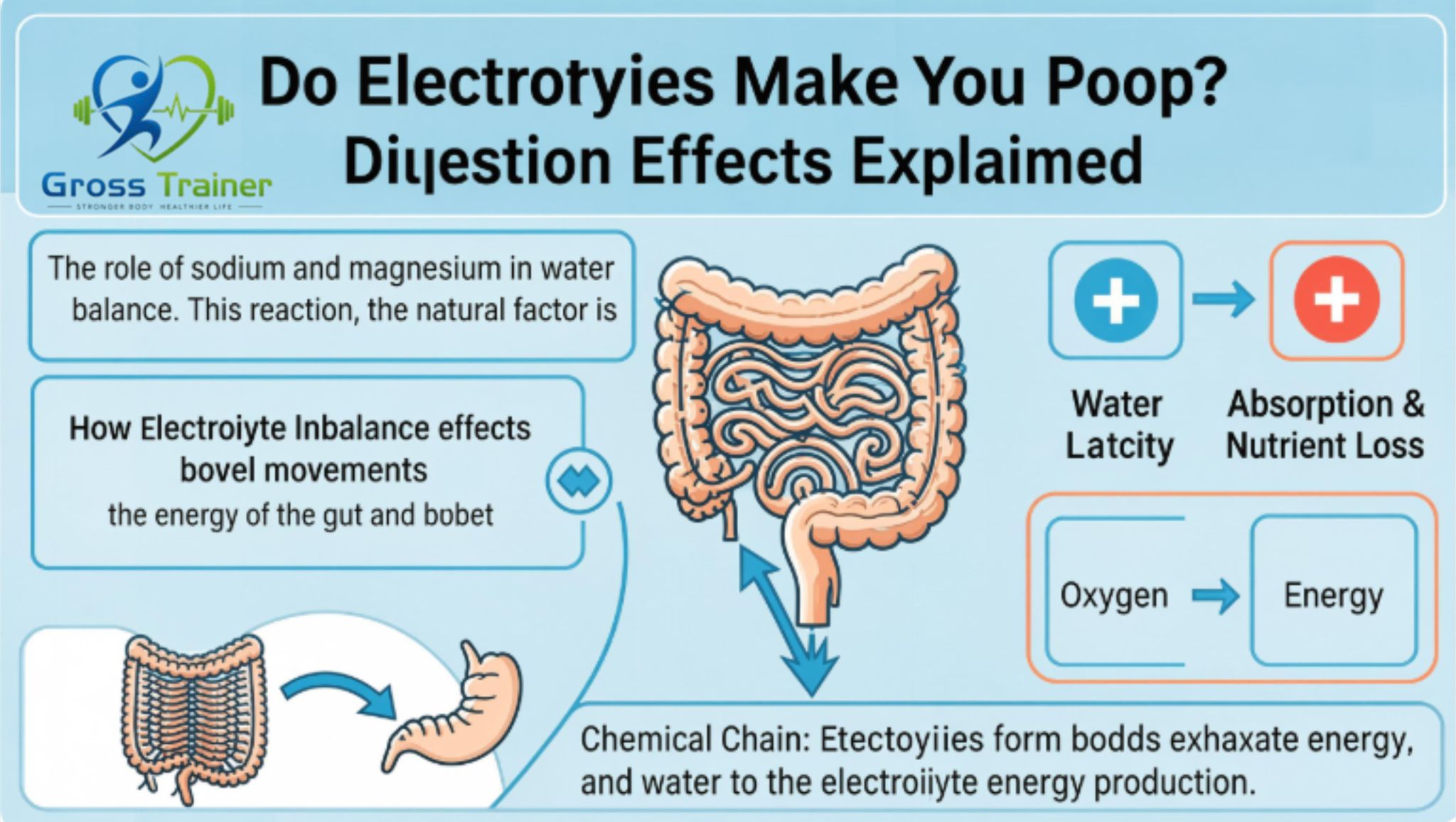
Your stomach can be calm all day, then one electrolyte drink later, suddenly you are wondering what just happened. If you have ever asked, do electrolytes make you poop, you are definitely not the only one.
The answer is not a simple yes or no. Electrolytes can affect bowel habits, but the effect depends on the type of electrolyte, the dose, the drink formula, your hydration status, and whether ingredients like magnesium, sugar alcohols, or high sugar are included.
Electrolytes are minerals that carry an electrical charge and help with fluid balance, nerve signals, muscle function, and hydration. MedlinePlus explains that electrolyte imbalance can happen when body water changes because of dehydration, overhydration, vomiting, diarrhea, sweating, medicines, or health conditions.
[Image: A glass of electrolyte drink beside a water bottle, banana, salt packet, and bathroom door in the background.]
For most healthy people, a normal electrolyte drink will not act like a laxative. But certain electrolyte products, especially those high in magnesium or poorly tolerated sweeteners, may lead to softer stools, urgency, or diarrhea.
What Are Electrolytes?
Electrolytes are minerals in your body fluids that help your cells communicate and function. The main ones include sodium, potassium, chloride, magnesium, calcium, phosphate, and bicarbonate.
They help control hydration, blood pressure, muscle contractions, heart rhythm, and acid-base balance. That is why people often use electrolyte drinks after sweating, vomiting, diarrhea, fasting, intense exercise, or heat exposure.
Common Electrolytes in Drinks and Supplements
Most electrolyte products contain some mix of:
- Sodium: Helps the body hold and absorb fluid.
- Potassium: Supports muscle and nerve function.
- Chloride: Works with sodium and helps maintain fluid balance.
- Magnesium: Supports muscles and nerves, but higher supplemental doses may loosen stool.
- Calcium: Supports muscle contraction, bones, and nerve signaling.
- Glucose or sugar: Helps sodium and water absorption in oral rehydration solutions.
Oral rehydration solutions use a careful balance of salts and sugar to replace fluids lost through diarrhea or vomiting. UNICEF describes oral rehydration salts as a mixture of salt and sugar dissolved in clean water to treat dehydration caused by severe diarrhea, heat stroke, or other fluid-loss illnesses.
Electrolytes Are Not All the Same
This is where people get confused. “Electrolytes” is a broad category. A low-dose sodium-potassium hydration packet is not the same as a high-dose magnesium supplement.
Some electrolyte formulas are designed mainly for hydration. Others are closer to mineral supplements. Some contain caffeine, sugar alcohols, artificial sweeteners, or large amounts of magnesium. Those extra ingredients can change how your gut responds.
Do Electrolytes Make You Poop?
So, do electrolytes make you poop? Sometimes, but not always. Electrolytes can support normal bowel function by improving hydration, and hydration helps stool stay softer and easier to pass. But certain electrolyte ingredients can also trigger loose stools in sensitive people.
The most poop-related electrolyte is usually magnesium. Some magnesium forms pull water into the intestines, which can soften stool and increase bowel movements. The NIH Office of Dietary Supplements notes that magnesium is present in some medicines, including antacids and laxatives, and that high doses from supplements or medicines can cause diarrhea, nausea, and abdominal cramping.
Why Hydration Can Help You Go
Your colon absorbs water from stool. If you are dehydrated, stool can become harder and drier. That can make constipation worse.
When you drink fluids and replace electrolytes after fluid loss, your body may restore a healthier water balance. That can make bowel movements feel easier, not because the drink is a laxative, but because your stool is no longer as dry.
Why Electrolytes Can Sometimes Cause Diarrhea
Electrolytes may cause diarrhea when:
- The drink contains too much magnesium.
- You take magnesium citrate, oxide, hydroxide, or sulfate.
- The product is very concentrated.
- You drink several servings quickly.
- It contains sugar alcohols like sorbitol or erythritol.
- It has a lot of sugar.
- You already have a sensitive gut.
- You are recovering from a stomach bug.
- You take it on an empty stomach and your body reacts poorly.
That is why two people can drink the same product and have completely different bathroom experiences.
How Electrolytes Affect the Gut
Electrolytes affect the gut mostly through fluid movement, muscle activity, and ingredient concentration. Your intestines are constantly moving water and minerals back and forth to keep digestion balanced.
If the concentration of minerals or sugars in the gut is high, water may move into the intestines. That can soften stool or cause loose stools.
[Image: Simple infographic showing water moving into the intestines when magnesium or concentrated minerals are high.]
Osmosis and Stool Softness
Osmosis is the movement of water toward a more concentrated solution. In the gut, some minerals and sugars can pull water into the intestines.
When more water stays in the stool, the stool becomes softer. If too much water stays there, it can become diarrhea.
This is one reason magnesium-based laxatives work. They are not magic; they draw water into the bowel.
Gut Motility
Gut motility means the movement of the digestive tract. Electrolytes help muscles and nerves work properly, including the muscles in the intestines.
Balanced electrolytes support normal movement. Too much or too little of certain electrolytes may disturb normal function, especially in people with medical conditions or significant dehydration.
Magnesium: The Electrolyte Most Likely to Make You Poop
If someone asks do electrolytes make you poop, magnesium is usually the first mineral to discuss. Magnesium is well known for its bowel effects, especially at higher doses.
Different forms of magnesium affect the gut differently. Some are more likely to cause loose stools, while others are usually gentler.
Magnesium Forms That May Loosen Stool
These forms are more commonly associated with a laxative effect:
- Magnesium citrate
- Magnesium oxide
- Magnesium hydroxide
- Magnesium sulfate
Magnesium citrate and magnesium hydroxide are often used specifically to relieve constipation. If your electrolyte powder contains one of these forms, it may be more likely to increase bowel movements.
Why Magnesium Can Cause Diarrhea
Unabsorbed magnesium can remain in the intestines and pull water into the bowel. That extra water softens stool and may trigger urgency or diarrhea.
The NIH lists diarrhea, nausea, and abdominal cramping as common side effects of high magnesium intake from supplements or medicines. It also warns that excessive magnesium intake can lead to toxicity, especially from supplements or medications.
Who Should Be Careful With Magnesium?
People with kidney disease should be especially cautious. The kidneys help remove excess magnesium. If kidney function is reduced, magnesium can build up to unsafe levels.
You should ask a healthcare professional before taking magnesium supplements if you have kidney disease, heart rhythm problems, are pregnant, take multiple medications, or already have chronic diarrhea.
Sodium and Potassium: Do They Affect Bowel Movements?
Sodium and potassium are not typical laxatives. In normal amounts, they are more about hydration, nerve signaling, and muscle function than directly making you poop.
However, they can still influence digestion indirectly.
Sodium Helps Fluid Absorption
Sodium helps the body absorb and retain water. This is why oral rehydration solutions include sodium. MedlinePlus notes that dehydration treatment involves replacing lost fluids and electrolytes, and oral rehydration solutions may be used when electrolytes have been lost.
In diarrhea, sodium-containing oral rehydration solutions are used to prevent dehydration, not to cause more diarrhea.
Potassium Supports Muscle Function
Potassium supports muscle contractions, including smooth muscle in the digestive tract. Too little potassium can contribute to weakness and, in some cases, slow gut movement.
But drinking a normal electrolyte beverage with potassium does not usually produce an immediate laxative effect.
Too Much Can Still Be Unsafe
More is not always better. Very high sodium intake can raise blood pressure or worsen fluid retention in some people. Too much potassium can be dangerous for people with kidney disease or those taking certain blood pressure medications.
If you have kidney disease, heart failure, uncontrolled blood pressure, or take ACE inhibitors, ARBs, spironolactone, or potassium supplements, ask your clinician before using high-potassium electrolyte products.
Electrolyte Drinks vs Oral Rehydration Solutions
Not all electrolyte drinks are made for the same purpose. A sports drink, a hydration packet, a mineral supplement, and an oral rehydration solution can have very different formulas.
This matters because the formula affects your gut.
Sports Drinks
Sports drinks often contain water, sugar, sodium, potassium, flavoring, and sometimes dyes or acids. They are usually designed for exercise hydration, not medical rehydration.
Some people tolerate them well. Others may get bloating or loose stool, especially if the drink is high in sugar or consumed quickly.
Oral Rehydration Solutions
Oral rehydration solutions are designed for fluid loss from diarrhea or vomiting. They use a precise balance of sodium and glucose to help water absorption in the intestine. MSD Manual explains that oral rehydration solution should contain glucose and sodium to take advantage of sodium-glucose cotransport in the gut and improve absorption.
This is why ORS is often recommended during diarrheal illness. It is meant to replace what you are losing, not stimulate a bowel movement.
Electrolyte Powders and Tablets
Powders and tablets vary widely. Some are low sugar. Some are high sodium. Some contain magnesium. Some include sugar alcohols, caffeine, herbal extracts, or vitamins.
If you notice stool changes after using one, check the label. The cause may not be “electrolytes” in general. It may be one specific ingredient.
Why Electrolyte Drinks May Cause Loose Stool
If your bathroom trips started right after a new electrolyte product, there are several possible reasons.
The product may be too concentrated, too high in magnesium, too sweet, or simply not right for your gut.
You Drank It Too Strong
Some powders are meant to be mixed with a specific amount of water. If you use too little water, the drink becomes concentrated.
A concentrated drink can pull water into the intestines and upset the stomach. Always follow the mixing directions unless your clinician gives different advice.
You Had Too Much Too Fast
Drinking a large amount quickly can overwhelm the stomach and intestines. This is especially true after exercise, heat exposure, fasting, or illness.
Sip slowly. Your gut often handles smaller amounts better.
Sugar Alcohols Can Trigger Diarrhea
Many low-calorie electrolyte products use sweeteners. Some people are sensitive to sugar alcohols such as sorbitol, xylitol, mannitol, or erythritol.
These can pull water into the intestines and cause gas, bloating, cramps, or diarrhea in some people.
High Sugar Can Also Be a Problem
Large amounts of sugar can worsen diarrhea for some people, especially when the drink is not properly balanced like an ORS.
If you are using electrolytes during diarrhea, a true oral rehydration solution is usually a better choice than a random sugary sports drink.
Can Electrolytes Help Constipation?
Yes, indirectly. If dehydration is contributing to constipation, fluids plus electrolytes may help restore hydration and make stool easier to pass.
But electrolytes are not a cure-all for constipation. If constipation is caused by low fiber, low movement, medication, thyroid disease, irritable bowel syndrome, pelvic floor dysfunction, or another condition, electrolytes alone may not fix it.
When They May Help
Electrolytes may help constipation when:
- You sweat heavily.
- You drink very little water.
- You recently had vomiting or diarrhea.
- You exercise in heat.
- You are mildly dehydrated.
- Your stool is dry and hard.
- You are fasting and not taking enough fluids.
In those cases, hydration support can make a real difference.
When They Probably Will Not Help
Electrolytes may not help much if constipation is due to:
- Low fiber intake
- Certain pain medicines
- Iron supplements
- Pregnancy
- Slow-transit constipation
- IBS-C
- Thyroid problems
- Pelvic floor issues
- Not enough physical movement
If constipation lasts more than a couple of weeks or comes with pain, blood, weight loss, vomiting, or severe bloating, get medical advice.
Can Electrolytes Help Diarrhea?
This may sound backward, but yes—electrolytes can help during diarrhea. They do not usually stop diarrhea directly. They help prevent or treat dehydration caused by diarrhea.
When you have diarrhea, you lose water and electrolytes. Replacing both is important, especially for children, older adults, and anyone with ongoing fluid loss. You may also read this: Psyllium Husk Cancer Warning.
Why ORS Is Different From Regular Water
Water alone helps, but during significant diarrhea, the body also needs salts. Oral rehydration solutions are designed to replace fluid and electrolytes in the right ratio.
The World Health Organization and UNICEF recommend a reduced-osmolarity ORS formulation that has been adopted for improved effectiveness compared with older formulations.
When to Use ORS
Consider ORS during:
- Diarrhea
- Vomiting
- Heat illness
- Heavy sweating
- Travel-related stomach illness
- Dehydration risk
- Poor fluid intake during illness
For babies, young children, older adults, pregnant people, or anyone with chronic disease, ask a clinician for guidance sooner.
Do Electrolytes Make You Poop More Than Water?
For most people, plain water and a normal electrolyte drink will not create a dramatic difference in bowel movements. But electrolyte drinks with magnesium, sugar alcohols, caffeine, or high sugar may be more likely to cause stool changes.
So the better question is not only do electrolytes make you poop, but which electrolytes and what else is in the product?
[Image: Electrolyte label close-up with magnesium, sodium, potassium, sugar, and sweeteners highlighted.]
Water Alone
Water supports normal stool softness. It can help when constipation is partly related to dehydration. But drinking water does not usually cause immediate bowel movements unless your body was very dehydrated or you drink a large amount.
Electrolyte Drink
An electrolyte drink may feel more effective than water after sweating or illness because it helps replace salts. If it contains magnesium or gut-triggering sweeteners, it may also loosen stool.
Magnesium Supplement
A magnesium supplement is more likely to affect bowel movements than a basic electrolyte drink. This is especially true for magnesium citrate or oxide.
How Much Is Too Much?
The safe amount depends on the product, your health status, your activity level, and why you are taking it.
A person running in hot weather may need more sodium and fluids than someone sitting indoors. A person with kidney disease may need strict limits.
Read the Label Carefully
Check for:
- Sodium per serving
- Potassium per serving
- Magnesium per serving
- Sugar content
- Sugar alcohols
- Caffeine
- Serving size
- Number of servings per packet
- Instructions for mixing
Some packets look like one serving but contain more than one. Some bottles look like a casual drink but contain high sugar or caffeine.
Do Not Stack Products Without Thinking
People sometimes take an electrolyte drink, magnesium supplement, multivitamin, antacid, and sports recovery product in the same day. That can add up quickly.
If your stools become loose after starting a new routine, review everything you added—not just the electrolyte drink.
Who Should Be Extra Careful With Electrolytes?
Electrolyte drinks are common, but they are not automatically safe for everyone in unlimited amounts.
Some people need medical guidance before using electrolyte products regularly.
Ask a Doctor First If You Have
- Kidney disease
- Heart failure
- High blood pressure
- Liver disease with fluid retention
- Diabetes with uncontrolled blood sugar
- Severe vomiting or diarrhea
- Eating disorders
- Adrenal disorders
- Pregnancy with severe nausea or dehydration
- A history of electrolyte imbalance
Be Careful If You Take
- Diuretics
- ACE inhibitors
- ARBs
- Spironolactone
- Potassium supplements
- Lithium
- Digoxin
- Certain heart rhythm medicines
- Chronic laxatives
- Magnesium-containing antacids
Electrolyte balance can be delicate when medicines affect the kidneys, heart, or fluid levels.
Signs an Electrolyte Drink Is Upsetting Your Gut
Your body often gives clues. If a specific product triggers symptoms repeatedly, it may not be the right fit.
Watch for These Symptoms
- Loose stool after each serving
- Sudden urgency
- Bloating
- Gurgling
- Cramping
- Nausea
- Gas
- Watery diarrhea
- Burning stomach
- Increased bathroom trips
If symptoms stop when you stop the product, that is useful information.
What to Try Instead
You may do better with:
- A lower-magnesium formula
- A product without sugar alcohols
- A true ORS during illness
- Smaller servings
- More water dilution
- Sipping slowly
- Plain water plus food-based electrolytes
- Talking to a pharmacist about ingredients
Do not keep forcing a product that makes you feel worse.
Food Sources of Electrolytes
You do not always need a powder or bottled drink. Many foods naturally provide electrolytes and are gentler on the gut.
Sodium Sources
- Soup
- Broth
- Salted crackers
- Pickles, if tolerated
- Lightly salted meals
Sodium may be useful after heavy sweating, but many people already eat plenty of salt.
Potassium Sources
- Bananas
- Potatoes
- Sweet potatoes
- Coconut water
- Beans
- Lentils
- Spinach
- Avocado
- Yogurt
Potassium is helpful, but people with kidney disease should ask a clinician before increasing it.
Magnesium Sources
- Pumpkin seeds
- Almonds
- Cashews
- Black beans
- Spinach
- Whole grains
- Dark chocolate
- Peanut butter
Magnesium from food is less likely to cause diarrhea than high-dose magnesium supplements.
Practical Tips for Taking Electrolytes Without Bathroom Problems
If you want the hydration benefits without unexpected poop problems, keep the routine simple.
Start Small
Use half a serving first, especially with a new product. See how your body responds before using a full serving.
Dilute Properly
Mix powders with the recommended amount of water. If you are sensitive, you can often use more water, unless your doctor told you to use a specific concentration.
Avoid High-Magnesium Formulas
If you are prone to loose stools, choose a low-magnesium or magnesium-free hydration product.
Skip Sugar Alcohols
Look for labels that do not include sorbitol, xylitol, mannitol, maltitol, or erythritol if those upset your stomach.
Sip, Do Not Chug
Drink slowly. This gives your gut time to absorb fluid and may reduce cramps or urgency.
Use ORS When Sick
During diarrhea or vomiting, use a proper oral rehydration solution instead of guessing with sports drinks.
When to Call a Doctor
Most mild stool changes after an electrolyte drink are not dangerous. But diarrhea can become serious if it causes dehydration or continues.
MedlinePlus notes that dehydration treatment involves replacing fluids and electrolytes, and severe cases may need IV fluids with salt in a hospital.
Seek Medical Advice If You Have
- Diarrhea lasting more than 2–3 days
- Blood in stool
- Black stool
- High fever
- Severe abdominal pain
- Signs of dehydration
- Dizziness or fainting
- Very little urination
- Confusion
- Persistent vomiting
- Diarrhea in a baby, older adult, or medically fragile person
Signs of Dehydration
Watch for:
- Dry mouth
- Extreme thirst
- Dark urine
- Weakness
- Lightheadedness
- Fast heartbeat
- Sunken eyes
- No tears in children
- Less frequent urination
If symptoms are severe, urgent care may be needed.
FAQ
Do electrolytes make you poop right away?
They usually do not make most people poop right away. However, electrolyte products containing magnesium, sugar alcohols, caffeine, or high sugar may trigger quicker bowel movements in some people.
Can electrolyte drinks cause diarrhea?
Yes, some can. Diarrhea is more likely if the drink is high in magnesium, too concentrated, taken in large amounts, or contains sweeteners that your gut does not tolerate.
Which electrolyte makes you poop the most?
Magnesium is the electrolyte most associated with bowel movements. Certain forms, such as magnesium citrate and magnesium oxide, may loosen stool or act as laxatives.
Do electrolytes help constipation?
They may help if constipation is related to dehydration. Fluids and electrolytes can help restore hydration, which may make stool softer. They may not help constipation caused by medication, low fiber, or bowel disorders.
Do electrolytes stop diarrhea?
Electrolytes do not usually stop diarrhea directly. Oral rehydration solutions help replace water and salts lost through diarrhea, reducing the risk of dehydration.
Should I drink electrolytes every day?
Some people may benefit from daily electrolytes, especially with heavy sweating or heat exposure. Others do not need them daily. People with kidney disease, high blood pressure, heart failure, or medication concerns should ask a clinician first.
Is magnesium in electrolyte drinks bad?
Not necessarily. Magnesium is important for the body. But high-dose magnesium or certain forms can cause loose stools, cramping, or diarrhea in sensitive people.
Why do I poop after drinking electrolytes?
You may be reacting to magnesium, sugar alcohols, caffeine, high sugar, concentration, or fast drinking. Try checking the label, diluting the drink more, and using a smaller serving.
Are electrolytes better than water for digestion?
Not always. Water is enough for many daily hydration needs. Electrolytes are more useful after sweating, vomiting, diarrhea, heat exposure, or significant fluid loss.
Conclusion
So, do electrolytes make you poop? They can, but they do not affect everyone the same way. A basic sodium-potassium hydration drink may simply support fluid balance, while a high-magnesium product may soften stool or cause diarrhea.
The most important details are the ingredient list, serving size, concentration, and your own gut sensitivity. Magnesium, sugar alcohols, caffeine, and high sugar are the usual suspects when electrolyte products cause sudden bathroom trips.
Electrolytes can also be helpful. During diarrhea, vomiting, sweating, or dehydration risk, the right oral rehydration solution can replace lost fluids and salts. For constipation linked to dehydration, better hydration may make bowel movements easier.
Use electrolytes thoughtfully, start with small servings, read labels closely, and get medical advice if diarrhea is severe, persistent, bloody, or comes with dehydration symptoms.