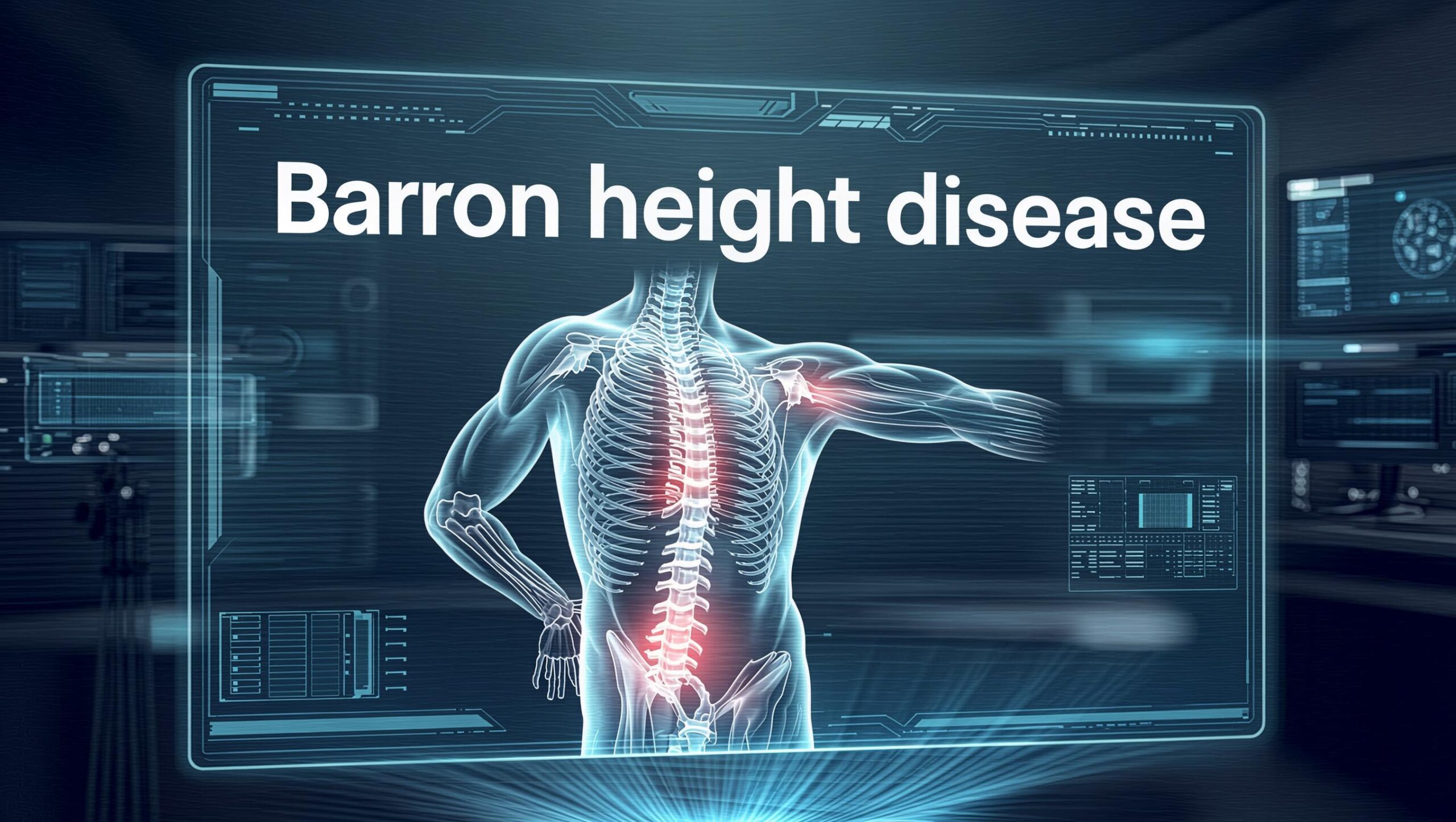
A person can become the center of online curiosity for the simplest reason: they walk into a room and look much taller than everyone else. That is exactly why the phrase barron trump height disease has spread across search engines, social media posts, and celebrity discussion pages.
But curiosity can quickly turn into unfair speculation. Barron Trump is known publicly as Donald Trump and Melania Trump’s youngest son, and his height has attracted attention because he appears exceptionally tall in public appearances. According to People, Donald Trump said in August 2025 that Barron stood at 6’9″, while also describing him as athletic and “on the tall side” for soccer.
[Image: Editorial-style photo placement showing a tall young man silhouette beside average-height silhouettes, with a neutral caption: “Why public height differences spark online curiosity.”]
This topic matters because readers deserve a clear answer, not gossip dressed as information. There is no credible public confirmation that Barron Trump has any height-related disease. The more useful question is why people connect unusual height with illness, what medical experts actually say about tall stature, and where the line sits between public interest and private health.
A responsible article should separate three things: verified public facts, general medical context, and unsupported rumor. That is the fairest way to answer the search without turning a young public figure’s body into a diagnosis.
What barron trump height disease Really Means Online
The phrase does not refer to an officially confirmed condition. It is a search term created by public curiosity, viral photos, and assumptions about extreme height. People see Barron standing near his parents or other public figures, notice the difference, and start asking whether his height must have a medical explanation.
That assumption is not reliable. Height is influenced by family genetics, nutrition, puberty timing, general health, and natural variation. In many families, one person may simply grow much taller than expected. A person can be unusually tall and still be healthy. A person can also have a medical condition and not look unusual. Appearance alone is never enough to diagnose anyone.
[Image: Simple lifestyle image placement showing a measuring wall, sneakers, and a notebook, captioned: “Height is measured with context, not guessed from photos.”]
The safer way to understand this topic is to treat it as a rumor-checking question. Public reports discuss Barron’s height. Public medical sources explain what tall stature can mean in general. But no trustworthy medical source has published a diagnosis about Barron Trump.
That distinction matters. A search term can be popular without being true. A rumor can trend without being evidence. A person’s height can be noticeable without being a symptom.
[Infographic: “Verified vs. Rumored” — left side: publicly reported height comments, public appearances, age; right side: unverified diagnosis claims, social media guesses, photo-based assumptions.]
Who Is Barron Trump and Why Does His Height Get Attention?
Barron William Trump was born on March 20, 2006, and is the only child of Donald Trump and Melania Trump. He spent much of his childhood outside the center of political attention, although public interest naturally followed him because of his family. By 2024, he had graduated from Oxbridge Academy in West Palm Beach, Florida, and later began studying at New York University.
His height became a repeat media talking point because it is visually striking. When he appears beside Donald Trump, who is already tall, Barron still appears significantly taller. Public photos from events, school graduation coverage, and political appearances helped fuel more searches about his stature.
Why Public Appearances Can Exaggerate Height
Photos are not medical records. Camera angle, footwear, posture, platform height, lens distortion, and the height of nearby people can all change how tall someone appears. A person standing closer to the camera can look larger. A person in formal shoes may appear taller. A person photographed from a low angle may look more imposing.
That does not mean Barron is not very tall. It simply means internet users should be careful about making exact claims from images alone. Even when a height estimate is likely close, it does not prove anything about health.
Is There Any Verified Barron Trump Height Disease?
There is no verified barron trump height disease in credible public reporting. No official family statement, medical record, or reliable health source has confirmed that Barron Trump has a disease connected to his height.
This is the most important point in the whole discussion. Public curiosity is not evidence. A viral claim is not a diagnosis. A person’s body type, face, posture, or height should not be used as proof of a medical condition.
What Has Actually Been Reported
What has been reported is much simpler: Barron Trump is very tall. People reported that Donald Trump said Barron was 6’9″ during an August 2025 Oval Office appearance with FIFA President Gianni Infantino. In the same context, Trump described Barron as a good athlete and a good soccer player, while joking that he was “on the tall side” for soccer.
That is a height-related public comment, not a medical statement. It does not mention disease, disorder, diagnosis, treatment, symptoms, or concern.
What Has Not Been Verified
There is no verified report that Barron has Marfan syndrome, gigantism, a hormone disorder, or any other condition. Those claims usually come from online speculation. They often rely on a single visible trait: height.
That is not enough. Medical conditions are evaluated through history, physical examination, family context, growth patterns, sometimes imaging, lab work, genetic testing, and specialist assessment. A social media post cannot replace any of that.
Why People Link Extreme Height With Disease
People often look for a simple explanation when something seems unusual. If someone is exceptionally tall, internet users may jump to terms like “Marfan syndrome” or “growth hormone disorder” because those conditions are associated with height in public imagination.
The problem is that most people only know the surface-level signs. They may hear that Marfan syndrome can involve tall stature and long limbs, then assume every very tall person fits that pattern. That is not how medicine works.
Tall Stature Has Many Possible Explanations
Medical sources define tall stature in children as height more than two standard deviations above the average for age, usually above the 97th percentile. However, being above that range does not automatically mean disease. The American Academy of Family Physicians notes that common causes include normal family tall stature as well as several medical causes, and that evaluation depends on history and physical exam findings.
In simple language, doctors do not ask, “Is this person tall?” and then diagnose a disease. They ask deeper questions: How fast did growth happen? Were growth patterns steady? Is the height consistent with family height? Are there other symptoms? Is puberty timing normal? Are body proportions unusual? Is there any heart, eye, bone, or endocrine concern?
Why Genetics Often Explain Height
Height is strongly influenced by genetics. Tall parents often have tall children, although children can be taller or shorter than both parents. Family height patterns are one reason clinicians may calculate midparental height when evaluating growth. If a child’s projected height is close to what would be expected from parental height, that can support a normal family pattern.
This matters for public discussion because people often treat unusual height as suspicious before considering ordinary inheritance. A tall young adult does not need a dramatic explanation.
The Marfan Syndrome Question
Marfan syndrome is one of the most common conditions people mention when discussing barron trump height disease, but mentioning it does not make it relevant to Barron. It is a real medical condition, and it deserves accurate explanation rather than casual use as a rumor label.
Mayo Clinic describes Marfan syndrome as an inherited connective tissue disorder that can affect the heart, eyes, blood vessels, and skeleton. People with Marfan syndrome are often tall and thin with unusually long arms, legs, fingers, and toes, but the condition can vary widely from person to person.
Height Alone Does Not Equal Marfan Syndrome
This is where most online speculation goes wrong. Tall stature can be one feature of Marfan syndrome, but it is not enough for a diagnosis. Mayo Clinic lists other possible features, including disproportionate limb length, chest wall differences, crowded teeth, heart murmurs, extreme nearsightedness, spine curvature, and flat feet.
A person standing tall in a photo does not prove any of those findings. Even visible traits can be misleading without medical evaluation. That is why responsible writing should never say or imply that Barron has Marfan syndrome.
Why Casual Diagnosis Is Harmful
Casual diagnosis can sound harmless, but it has real effects. It turns someone’s appearance into a public medical file. It encourages readers to believe that bodies can be judged from photos. It also spreads misunderstanding about real conditions that affect real patients.
People with genetic or connective tissue disorders deserve accurate information, not celebrity rumor. And public figures, even famous ones, deserve basic medical privacy.
Other Medical Conditions People Mention
Some readers also ask about gigantism, acromegaly, growth hormone excess, or other endocrine issues when they see an unusually tall person. These conditions exist, but linking them to a specific person without evidence is not responsible.
Growth-related disorders usually involve patterns, not just final height. Doctors may look at growth velocity, puberty timing, bone age, symptoms, hormone levels, and body proportions. The CDC notes that growth charts help track children’s body measurements over time, but they are not a standalone diagnostic tool. They contribute to an overall clinical impression.
Growth Velocity Matters More Than One Photo
A single picture captures a moment. Growth evaluation looks at change over time. Was the person always tall? Did height increase rapidly over a short period? Did puberty start very early? Did weight, proportions, or other symptoms change? These are the kinds of questions that help clinicians decide whether an evaluation is needed.
That is why public speculation is weak. Viewers see isolated images, not serial measurements. They see public events, not medical charts.
Tall Does Not Mean Unhealthy
Many tall people are healthy. Some become athletes. Some simply come from tall families. Some have no medical issue at all. The internet tends to treat unusual physical traits as mysteries to solve, but real life is often less dramatic.
In Barron’s case, the only responsible public conclusion is that he is very tall and there is no verified disease tied to that height.
Why the Rumor Spread So Quickly
The internet rewards curiosity, but it also rewards exaggeration. A headline with a medical rumor often gets more attention than a careful explanation. When a public figure is photographed and people notice something unusual, search demand can build quickly.
The phrase barron trump height disease likely grew because it combines three powerful online triggers: a famous name, a striking physical feature, and a medical-sounding mystery. That combination can pull clicks even when the underlying claim is unsupported.
Social Media Makes Speculation Look Like Evidence
When many people repeat a claim, it begins to feel true. But repetition is not verification. A TikTok caption, an X thread, a YouTube short, or a low-quality blog post may quote another post rather than an original source.
This creates a loop. One person guesses. Another repeats it. A third writes a headline. A fourth asks Google. Soon, the rumor becomes a search trend even though no new evidence appeared.
Celebrity Culture Encourages Body Analysis
Celebrities and political families are often treated as public property. Their clothes, voices, posture, relationships, and bodies become topics for commentary. Barron Trump has received this kind of attention partly because he grew up in a famous family and partly because he became noticeably tall during his teenage years.
But attention does not remove the need for fairness. A public appearance is not an invitation to diagnose.
How to Read Height Claims Responsibly
When reading about Barron Trump or any public figure, it helps to sort information into three categories: confirmed, plausible, and unsupported.
Confirmed information is backed by a reliable source. For example, a direct public comment from Donald Trump about Barron’s height can be reported as a claim made by Donald Trump. Plausible information may be reasonable but still not proven. Unsupported information includes anonymous social media diagnosis, edited images, and medical claims without evidence.
A Simple Checklist for Readers
Before believing a claim about someone’s health, ask:
- Is there an official statement or credible medical confirmation?
- Is the claim based only on appearance?
- Does the article separate fact from speculation?
- Is the source using fear or curiosity to attract clicks?
- Are medical terms explained carefully?
- Does the article respect privacy?
If the answer is mostly “no,” the claim should be treated with caution.
What Good Reporting Should Say
Good reporting can say Barron Trump is reported to be very tall. It can say his height has attracted public attention. It can explain tall stature in general medical terms. It can discuss why online rumors spread.
Good reporting should not claim that he has a disease unless credible evidence exists. At present, that evidence is not public.
The Privacy Issue Behind barron trump height disease
Search demand does not erase privacy. Even when a person is connected to a president, health information remains sensitive. This is especially important because Barron became famous as a child, not by choosing a public career in the same way adult politicians do.
Although he is now an adult, much of the public interest in him began when he was young. That history should make writers and readers more careful, not less.
Why Medical Privacy Matters
Medical privacy protects people from being reduced to conditions, rumors, or assumptions. It also protects the public from misinformation. When articles speculate about a person’s health without evidence, they can mislead readers about both the person and the condition being discussed.
A healthier approach is to answer the question directly: no verified disease has been publicly linked to Barron Trump’s height. Then the article can educate readers about how height is actually understood.
Respectful Curiosity Is Possible
It is normal to wonder about someone’s height when it is visually unusual. Curiosity is human. The problem starts when curiosity becomes certainty without proof.
Readers can ask, “How tall is he reported to be?” or “Why do people search this?” Those questions are fair. The question becomes unfair when it assumes illness first and looks for evidence later.
What Doctors Consider When Someone Is Extremely Tall
Doctors evaluate height with context. They may compare a person’s height with age-based percentiles, family history, growth speed, body proportions, puberty timing, and symptoms. For children and teens, growth charts are useful because they show patterns over time, not just one measurement. The CDC emphasizes that growth charts are tools that contribute to clinical impression, not diagnostic instruments by themselves.
The American Academy of Family Physicians explains that the initial evaluation of unusual stature includes history, physical examination, accurate serial measurements, growth velocity, midparental height, and bone age when needed.
Definitions Readers Should Know
Tall stature: A height above the expected range for age, commonly above the 97th percentile in children.
Familial tall stature: A normal pattern where a child is tall because family members are tall.
Growth velocity: The rate at which a child grows over time.
Bone age: An estimate of skeletal maturity, often assessed through imaging when doctors need more growth context.
Connective tissue disorder: A condition affecting tissues that support structures in the body, such as bones, joints, blood vessels, and organs.
These definitions help readers understand why height discussions need nuance. A label should never come before evidence.
The Best Answer to the Search
The best answer is simple: barron trump height disease is a rumor-based search phrase, not a confirmed medical fact. Barron Trump is publicly known to be very tall, and Donald Trump has publicly described him as 6’9″. But there is no verified public diagnosis linking that height to a disease.
That answer may be less sensational than online speculation, but it is more trustworthy. It respects the difference between public reporting and private medical information. It also helps readers understand that height alone does not prove illness.
FAQs
Does Barron Trump have a height disease?
There is no credible public confirmation that Barron Trump has any disease related to his height. Public reports discuss his tall stature, but they do not confirm a medical diagnosis.
How tall is Barron Trump reported to be?
Donald Trump reportedly said in August 2025 that Barron was 6’9″. People covered the remark during Trump’s Oval Office appearance with FIFA President Gianni Infantino.
Why do people search barron trump height disease?
People search it because Barron appears much taller than many people around him. Online curiosity often turns unusual physical traits into medical questions, even when there is no evidence of illness.
Is being very tall a disease?
No. Being very tall is not automatically a disease. Many tall people are healthy. Doctors look at growth history, family height, physical findings, and symptoms before considering any medical explanation.
Does Barron Trump have Marfan syndrome?
There is no verified public evidence that Barron Trump has Marfan syndrome. Marfan syndrome is a real connective tissue disorder, but it cannot be diagnosed from height or photos alone.
Can photos prove a medical condition?
No. Photos can be misleading because of angle, posture, shoes, lens effects, and comparison with nearby people. Medical conditions require proper clinical evaluation, not visual guessing.
Why is height sometimes linked with medical evaluation?
Doctors may evaluate unusually tall stature if growth is very rapid, far outside family expectations, or paired with other symptoms. The AAFP notes that evaluation is guided by history and physical examination findings.
What should readers believe about this topic?
Readers should believe verified facts only: Barron Trump is reported to be very tall, but no credible public source has confirmed a disease related to his height.
Conclusion
The phrase barron trump height disease sounds like it promises a hidden medical explanation, but the verified answer is much simpler. Barron Trump’s height has drawn attention because it is unusual and highly visible, especially in public photos beside other well-known figures.
Still, unusual height is not a diagnosis. Reliable sources have reported comments about his height, but no credible public source has confirmed that he has a height-related disease. The responsible conclusion is to treat medical rumors with caution, understand tall stature in proper context, and respect the privacy of real people behind viral searches. Curiosity is natural; unsupported diagnosis is not.