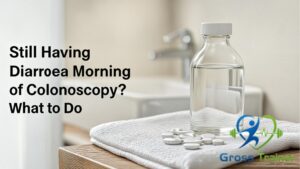
Your colonoscopy morning is stressful enough without wondering whether your body is doing the “right” thing. If you are still having diarrhea morning of colonoscopy, it can feel alarming, messy, and confusing—but in many cases, it simply means the bowel prep is still working.
The real question is not just whether you are having diarrhea. It is what the output looks like, whether you completed your prep as instructed, and whether you can safely travel to the endoscopy center. Colonoscopy prep is designed to empty the colon so the doctor can clearly see the lining, and frequent watery bowel movements are expected during that process.
Many people panic on the morning of the procedure because they assume diarrhea means something has gone wrong. Usually, it means the opposite. The prep solution pulls water into the intestines and flushes stool out, so watery trips to the bathroom often continue after the final dose.
Still, there are moments when you should call your doctor or the endoscopy center before leaving home. Brown liquid, solid pieces, severe weakness, vomiting that prevents finishing prep, or signs of dehydration may need medical guidance.
What Does Diarrhea Mean on the Morning of a Colonoscopy?
Diarrhea on colonoscopy morning usually means the bowel preparation is actively clearing the colon. Most bowel prep regimens cause frequent watery stools, and many people continue passing liquid even after they think they are “empty.”
This can be uncomfortable, but it is not automatically a bad sign. The goal is not to stop bowel movements before the procedure. The goal is to get the colon clean enough for the doctor to see the bowel lining clearly. Mayo Clinic explains that bowel preparation is used to clear stool from the colon and may involve doses the night before and the morning of the exam.
Why the Prep Keeps Working After You Finish Drinking
Even after your last glass of prep solution, your intestines may keep moving. The liquid you drank has to pass through the digestive tract, loosen remaining stool, and flush out residue.
That is why someone may finish the prep at the correct time but still need the bathroom several times afterward. This does not always mean the prep failed. It may simply mean your body is finishing the cleanout.
When Diarrhea Is Actually a Good Sign
Diarrhea can be a good sign when it becomes watery, light yellow, or nearly clear. Many colonoscopy instruction sheets describe a successful prep as clear or yellow-tinged liquid by the end of the process.
If you can see through the liquid in the toilet and there are no solid pieces, your prep may be adequate. Some patients describe it as looking like urine, pale tea, or yellow water. That is often closer to what doctors want.
still having diarrhea morning of colonoscopy: Should You Be Worried?
If you are still having diarrhea morning of colonoscopy, worry less about the word “diarrhea” and focus more on color, clarity, timing, and symptoms. Watery output after bowel prep is expected. Thick brown stool or solid material is more concerning.
A clear or pale yellow liquid stool often suggests the colon is reasonably clean. However, if your stool remains dark brown, cloudy, muddy, or full of particles after completing the prep, your doctor may need to know before the procedure.
What Your Stool Should Look Like
By the time the prep is working well, stool usually changes in stages:
- Brown stool: This is common early in prep.
- Loose brown stool: The cleanout has started but is not complete.
- Cloudy yellow or brown liquid: Progress is happening, but residue may remain.
- Clear or yellow watery liquid: This is usually the desired endpoint.
- Clear liquid with tiny flecks: This may still be acceptable for some patients, depending on the clinic’s instructions.
Several medical centers tell patients that yellow or clear watery stool is a sign the prep is working, while solid stool or failure to drink enough prep may require calling the office.
What If It Is Still Brown?
Brown liquid does not always mean cancellation, but it raises the chance that the colon may not be clean enough. If it is dark, thick, or has solid pieces, call the endoscopy center.
Poor bowel cleansing can make it harder to see polyps or other abnormalities. In some cases, the procedure may need to be delayed or repeated because the doctor cannot safely or accurately examine the colon.
Why Bowel Prep Causes So Much Diarrhea
Bowel prep works by moving large amounts of fluid through the colon. Some preparations contain polyethylene glycol, sodium sulfate, magnesium-based ingredients, or other laxative agents. These medicines are not treating diarrhea; they are intentionally creating a controlled cleanout.
This is why still having diarrhea morning of colonoscopy can be normal. The medicine is doing what it was designed to do.
Your Colon Is Longer Than You Think
Many people feel “empty” after a few bathroom trips, but the colon is several feet long. Stool can remain higher up in the colon even when the rectum feels empty.
That is why clinics often tell patients to finish the full prep unless they have been told otherwise. One colonoscopy instruction sheet specifically notes that even if a person already has diarrhea, the full prep is still needed because the entire colon must be emptied for a high-quality exam.
Split-Dose Prep Can Cause Morning Bathroom Trips
Many colonoscopy plans use split dosing. This means one part of the prep is taken the evening before and the second part is taken the morning of the colonoscopy.
Split dosing is commonly recommended because it improves the chance of a clean colon. European bowel preparation guidance recommends split-dose bowel preparation for elective colonoscopy and says the last dose should be completed at least two hours before the procedure.
How to Know If Your Colonoscopy Prep Worked
A successful prep is usually judged by what is coming out, not by how many times you went to the bathroom. One person may go 10 times, another may go 20 times, and both may still be ready.
If you are still having diarrhea morning of colonoscopy, ask yourself: “Is it getting clearer?” If the answer is yes, that is usually reassuring.
Signs Your Prep May Be Working
Your prep may be working well if:
- Your stool is watery.
- The color is light yellow or clear.
- There are no solid pieces.
- You completed most or all of the prescribed prep.
- You followed the clear liquid and medication instructions.
- You stopped drinking at the time your clinic advised.
Many instructions advise patients to stop clear liquids a certain number of hours before the procedure, often two to four hours, depending on the clinic and anesthesia plan. Always follow your own center’s timing instructions.
Signs Your Prep May Not Be Good Enough
Call your doctor or endoscopy center if:
- You are still passing solid stool.
- The liquid is dark brown or muddy.
- You vomited much of the prep.
- You drank less than the amount required.
- You are dizzy, faint, confused, or very weak.
- You have severe abdominal pain or swelling.
- You are unsure whether it is safe to travel.
Some clinics advise that if a patient drinks less than 50–75% of the prep or continues passing solid stool, the procedure may need to be rescheduled.
What to Do If You Are Still Going to the Bathroom Before Leaving
If you are still having diarrhea morning of colonoscopy, stay close to the bathroom until the last possible safe moment before travel. Do not take anti-diarrhea medicine unless your doctor specifically told you to.
Anti-diarrhea medication can slow bowel movement and may interfere with the cleanout. The diarrhea is not an infection in this situation; it is part of the prep process.
Follow the Stop-Time for Liquids
Most endoscopy centers give a strict time when you must stop drinking. This is especially important if you will receive sedation or anesthesia.
Even clear liquids may need to stop a few hours before the procedure. If you are still thirsty, rinse your mouth, but do not swallow unless your clinic allows it.
Protect Your Skin
Frequent watery stool can irritate the skin around the anus. This is common and can make the morning feel worse than it needs to.
Helpful comfort steps include:
- Use soft toilet paper or unscented wipes.
- Pat instead of rubbing.
- Apply a thin layer of petroleum jelly or barrier cream.
- Avoid scented soaps.
- Wear loose, comfortable clothing.
- Bring extra underwear or a pad for the trip.
These steps do not change the prep quality, but they can make the experience more manageable.
Can You Still Have the Colonoscopy If You Have Diarrhea?
In many cases, yes. Diarrhea alone does not usually stop a colonoscopy. In fact, watery diarrhea is expected after bowel prep.
The bigger issue is whether the colon is clear enough. If the diarrhea is clear yellow liquid, your procedure may go ahead. If it is dark, thick, or full of stool, the doctor may not get a safe view.
Call Before You Cancel Yourself
Do not cancel your appointment on your own just because you are still having diarrhea. Call the endoscopy center first.
Clinics deal with this every day. They may ask what color the output is, whether you finished the prep, when your procedure is scheduled, and whether you have symptoms like vomiting or dizziness.
Why a Clean Colon Matters
A colonoscopy is only as useful as the view the doctor gets. If stool blocks the camera, small polyps can be missed. A poor prep can also make the procedure longer or lead to repeat testing.
That is why bowel prep instructions can feel strict. The uncomfortable cleanout helps the doctor perform a better exam. You may read this: Anion Gap Low: Causes, Meaning, Symptoms, and Next Steps.
When Diarrhea Could Signal a Problem
Most prep-related diarrhea is expected, but not every symptom should be ignored. You should get medical advice if diarrhea comes with warning signs.
Call your doctor, the endoscopy center, or urgent medical services if you have severe symptoms. This is especially important if you are older, have kidney disease, heart disease, diabetes, inflammatory bowel disease, or take medicines that affect fluid balance.
Symptoms That Need Medical Guidance
Seek advice if you notice:
- Fainting or near-fainting
- Severe weakness
- Confusion
- Chest pain
- Trouble breathing
- Severe belly pain
- Repeated vomiting
- Blood that is more than a small streak
- No urination for many hours
- Inability to keep fluids down before the stop-time
- Signs of dehydration, such as extreme thirst and dizziness
The prep can cause fluid loss, so hydration before your cutoff time matters. Mayo Clinic guidance on prep emphasizes clear fluids and avoiding red or purple liquids because they can interfere with the exam.
What Not to Do on Colonoscopy Morning
When people feel nervous, they sometimes make last-minute decisions that create bigger problems. If you are still having diarrhea morning of colonoscopy, avoid guessing your way through it.
The safest approach is to follow your written prep instructions and call the clinic if something does not match.
Do Not Take Extra Prep Unless Told
If your stool is not clear, you may feel tempted to drink extra laxatives. Do not do that unless your doctor or clinic tells you to.
Extra prep can increase dehydration, nausea, electrolyte problems, or unsafe timing before sedation.
Do Not Eat Solid Food
Eating solid food on the morning of a colonoscopy can leave residue in the colon and may affect sedation safety. Most patients are told to avoid solid food the day before or at least during the final prep window, depending on their instructions.
If you accidentally ate, call the endoscopy center and tell them exactly what and when.
Do Not Ignore Medication Instructions
Some medications may be taken with a small sip of water, while others may need special timing. Blood thinners, diabetes medicines, iron supplements, and certain heart or kidney-related medicines often require individualized instructions.
If you are unsure, call before taking or skipping important medication.
Practical Travel Tips If You Are Still Having Diarrhea
Leaving home while your bowels are still active can feel scary. A little planning can make the trip less stressful.
Try to use the bathroom right before leaving. Wear comfortable clothing that is easy to manage. Bring wipes, a small plastic bag, and backup underwear if the drive is long.
Choose the Safest Route
If possible, have someone else drive you. Most colonoscopy centers require a responsible adult to take you home after sedation anyway.
Choose a route with accessible bathrooms if your clinic is far away. Leave with enough time, but do not leave so early that you are uncomfortable waiting away from home.
Tell the Staff When You Arrive
If you are still passing liquid stool at check-in, tell the nurse. This is not embarrassing to them. They hear it often.
They may ask about color, timing, and whether you finished the prep. Your honest answer helps them decide whether everything is on track.
Why You Should Not Feel Embarrassed
Colonoscopy prep is one of those medical experiences nobody enjoys talking about, yet millions of people go through it. The diarrhea, urgency, bloating, and repeated bathroom trips are part of the process.
If you are still having diarrhea morning of colonoscopy, you are not doing anything wrong. Your body is responding to a strong bowel-cleansing medicine.
Doctors Expect This
Endoscopy teams know prep can be uncomfortable. They are not judging your symptoms. Their concern is whether the colon is clean enough and whether you are safe for sedation.
Being honest about your bowel movements is helpful. It gives the team information they actually need.
FAQ
Is it normal to still have diarrhea the morning of a colonoscopy?
Yes, it is often normal. Bowel prep commonly causes watery diarrhea, and it may continue after the last dose. What matters most is whether the stool is clear or light yellow and whether you completed the prep as directed.
What color should diarrhea be before a colonoscopy?
Ideally, it should be clear, pale yellow, or yellow-tinged liquid. Dark brown, muddy, thick liquid or solid pieces may mean the colon is not fully clean.
Should I cancel if I am still having diarrhea morning of colonoscopy?
Do not cancel on your own. Call your endoscopy center and explain what is happening. They will guide you based on your stool color, symptoms, prep completion, and procedure time.
Can I take Imodium before my colonoscopy?
Do not take Imodium or any anti-diarrhea medicine unless your doctor specifically says to. The diarrhea is part of the bowel-cleansing process.
What if I am still passing brown liquid?
Brown liquid may or may not be acceptable, depending on how dark and cloudy it is. If it is thick, muddy, or contains pieces, call your clinic before leaving.
What if I vomited my colonoscopy prep?
Call your doctor or endoscopy center. They need to know how much prep you kept down and whether your stool became clear. Do not take extra prep unless instructed.
Can I drink water if I am still thirsty?
Only until the cutoff time given by your clinic. Many centers require stopping clear liquids a few hours before sedation. Follow your own written instructions.
Why am I still having diarrhea after clear stool?
The prep solution and water may still be moving through your intestines. If the output is clear or yellow liquid, this can be part of the normal process.
Conclusion
Being still having diarrhea morning of colonoscopy can feel stressful, but it is often a sign that the bowel prep is still doing its job. The key is not the diarrhea itself—it is whether the output is watery, light yellow or clear, and free of solid stool.
If the liquid is clear or yellow and you followed your prep instructions, your colon may be ready. If it is still dark brown, thick, solid, or you feel very weak, dizzy, or unable to travel safely, call your endoscopy center before leaving.
A colonoscopy depends on a clean view, and your prep plays a big role in that. When in doubt, make the call. It is better to ask a quick question than to arrive worried, uncertain, or unsafe.