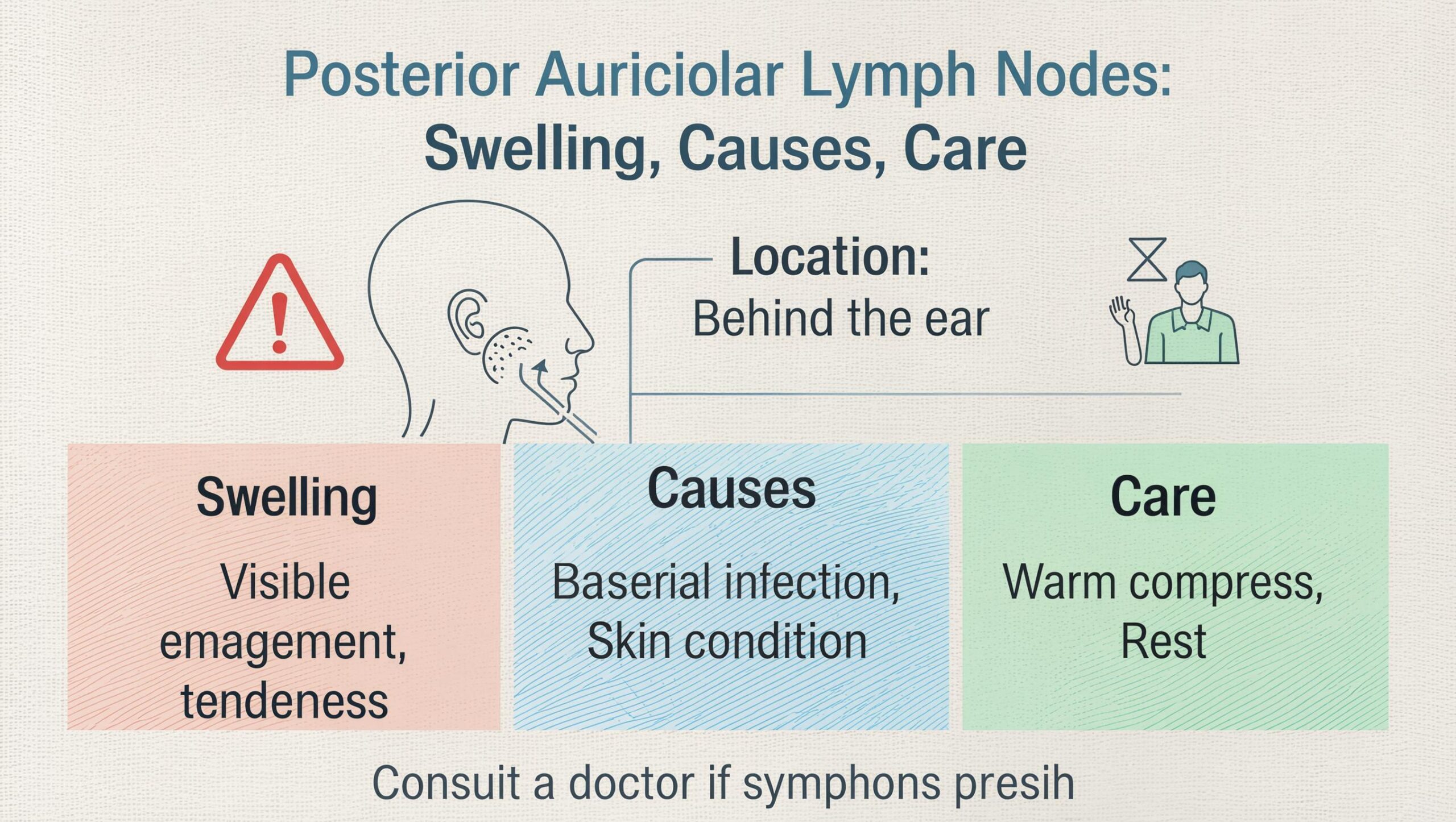
A small lump behind your ear can feel surprisingly worrying, especially when you notice it while washing your hair, wearing glasses, or touching your neck. In many cases, posterior auricular lymph nodes swell because your immune system is responding to something nearby, such as a scalp irritation, ear infection, skin infection, or viral illness.
These nodes are part of the body’s lymphatic defense system. They help filter fluid, trap germs, and support immune cells as they respond to infection or inflammation. Most enlarged lymph nodes are not dangerous, but the location, texture, pain level, duration, and related symptoms all matter when deciding what to do next.
[Image 1: A clean medical illustration showing the area behind the ear, the mastoid region, and nearby lymph nodes.]
If you have ever searched for “lump behind ear,” you probably saw everything from harmless causes to frightening possibilities. That is why this guide explains the topic in plain language: where these nodes are, why they swell, what symptoms to watch, and when medical care is the smart choice.
The goal is not to make you panic. It is to help you understand your body, notice meaningful patterns, and speak more confidently with a doctor if the swelling does not settle or comes with warning signs.
[Image 2: Infographic showing common causes of a lump behind the ear: scalp infection, ear infection, skin irritation, viral illness, cyst, and injury.]
What Are Posterior Auricular Lymph Nodes?
Posterior auricular lymph nodes are small immune-system structures located behind the ear, near the mastoid area of the skull. Anatomy references often describe them as mastoid or post-auricular nodes; they usually sit near the insertion of the sternocleidomastoid muscle and collect lymph from areas such as the upper ear, posterior neck, and parts of the external ear canal.
A lymph node works like a tiny checkpoint. Lymph fluid carries immune cells, proteins, and waste from body tissues. When bacteria, viruses, damaged skin cells, or other irritants appear in the drainage area, nearby nodes can become active, tender, and enlarged.
Why These Nodes Matter
The area behind the ear connects closely with the scalp, outer ear, skin, and upper neck. Because of that, a swollen node in this spot may point toward a local issue, not necessarily a whole-body illness.
For example, dandruff with scratching, a small infected hair follicle, eczema behind the ear, an ear canal infection, or even an irritated piercing can make the nearby node react. The node may feel like a pea, bean, or small rubbery bump under the skin.
Where Are They Located?
Posterior auricular lymph nodes sit behind the ear rather than in front of it. To feel the area, place your fingers just behind the earlobe and move upward along the bony ridge behind the ear. That bony area is called the mastoid region.
A normal node may be too small to feel. When it becomes reactive, it may feel round or oval, movable, and tender. A single swollen node on one side often suggests a local trigger on that same side, such as a small skin infection, ear irritation, or scalp problem.
Posterior Auricular vs Preauricular Nodes
Preauricular nodes sit in front of the ear. They are often linked with conditions affecting the front of the ear, eyelids, conjunctiva, or nearby facial skin. Post-auricular nodes sit behind the ear and more often reflect changes in the scalp, upper ear, posterior neck, or ear canal drainage area.
This difference matters because doctors often examine drainage patterns. A careful exam may include the scalp, ear canal, throat, skin, mouth, neck, and other lymph node groups to see whether the swelling is localized or generalized.
Why Posterior Auricular Lymph Nodes Swell
Posterior auricular lymph nodes usually enlarge when immune cells multiply inside the node. This can happen during infection, inflammation, immune reactions, or less commonly, cancer. Medical references describe lymphadenopathy as a common finding that can come from infection, inflammatory disease, or neoplasm, although many localized cases are benign and self-limited.
Swelling is not a diagnosis by itself. It is a clue. The real question is what triggered the node, how long it has been present, and whether there are symptoms elsewhere.
[Image 3: Simple diagram showing lymph flow from scalp, ear, and upper neck toward nodes behind the ear.]
Common Local Causes
Several everyday problems can cause swelling behind the ear:
- Scalp irritation or infection: Dandruff, scratching, infected follicles, lice, or small wounds can activate nearby nodes.
- Outer ear infection: Ear canal inflammation may cause pain, itching, discharge, or tenderness around the ear.
- Skin infection: A boil, acne-like bump, eczema flare, or infected cut behind the ear can lead to a tender node.
- Piercing irritation: A fresh or infected ear piercing may trigger swelling near the ear.
- Viral infections: Colds and other viral illnesses can make lymph nodes enlarge temporarily.
- Dental or throat infections: These more often affect other neck nodes, but doctors may still check the mouth and throat.
Rubella and Swelling Behind the Ear
Rubella is a classic infection associated with swelling in this region. The CDC notes that rubella-related lymphadenopathy may come before the rash, often involves posterior auricular or suboccipital nodes, and may last several days.
Rubella is much less common in places with strong vaccination programs, but it still matters clinically because it can resemble other rash illnesses and can be serious during pregnancy. Anyone with a possible rubella-like rash, fever, swollen nodes, pregnancy exposure, or uncertain vaccine status should contact a healthcare professional.
Less Common but Important Causes
Less common causes include autoimmune disease, tuberculosis, HIV, cat-scratch disease, certain medication reactions, and cancers such as lymphoma or metastatic skin cancer. These are not the most likely explanation for every small lump, but doctors consider them when swelling is persistent, unexplained, firm, fixed, generalized, or linked with systemic symptoms.
This is why context matters. A sore, movable node after a scalp infection is different from a hard, painless node that grows for weeks without any clear trigger.
What a Swollen Node May Feel Like
A reactive lymph node often feels soft to rubbery and moves slightly under the fingers. It may be sore when pressed, especially if the nearby skin or ear is inflamed. Tenderness can actually fit with infection or inflammation, although it does not prove the cause.
Size also matters, but it is not the only factor. Doctors consider the whole picture: age, recent infections, vaccines, skin wounds, travel, animal exposure, medication history, immune status, duration, and whether other lymph nodes are enlarged.
Painful vs Painless Swelling
A painful lump often suggests inflammation, infection, or irritation. For example, an infected hair follicle on the scalp can make a nearby node tender.
A painless lump is not automatically dangerous, but it deserves attention if it is hard, fixed, enlarging, or lasting longer than expected. Painless swelling can still be reactive, but persistent painless swelling is one reason to seek an exam.
One Side vs Both Sides
One-sided swelling often points to a local issue on that side. Look for small clues: a scratch on the scalp, an earache, a piercing, a skin rash, or a sore spot behind the ear.
Both-sided swelling may occur with viral illnesses or generalized immune reactions. If several lymph node areas are swollen, such as the neck, armpits, and groin, a doctor may evaluate for a broader cause.
When Should You Worry?
Most small, tender nodes that appear with a clear infection improve as the underlying problem settles. Still, some patterns should not be ignored.
Medical evaluation is especially important if the lump is getting bigger, feels hard or fixed, is larger than expected, drains fluid, comes with ongoing fever, unexplained weight loss, night sweats, or appears with swelling in several body areas. The MSD Manual lists red flags such as nodes that are hard or fixed, fever or weight loss, enlarged spleen, and certain high-risk exposures.
Seek Medical Advice Promptly If You Notice
- A lump that keeps growing
- A node that feels hard, irregular, or fixed in place
- Fever that does not settle
- Night sweats that soak clothing or bedding
- Unexplained weight loss
- Red, hot, painful skin around the lump
- Ear discharge, hearing change, or severe ear pain
- A rash with fever or possible rubella exposure
- Multiple swollen lymph node areas
- Swelling that lasts more than two to four weeks without improvement
The American Academy of Family Physicians notes that symptoms such as fever, chills, fatigue, malaise, night sweats, and unexplained weight loss help guide doctors when evaluating lymphadenopathy.
You may also read about :Am I Having A Heart Attack Female: Signs You Must Know.
How Doctors Evaluate Posterior Auricular Lymph Nodes
A doctor usually starts with history and physical examination. They may ask when you first noticed the lump, whether it changed in size, whether it hurts, and whether you had recent infection, skin problems, travel, pet scratches, insect bites, vaccines, or new medicines.
The physical exam often includes the ear canal, scalp, skin behind the ear, throat, mouth, neck, and other lymph node areas. This helps determine whether the swelling is localized or part of a generalized pattern.
Questions a Doctor May Ask
- How long has the lump been present?
- Is it painful, itchy, warm, or red?
- Has it grown quickly?
- Have you had fever, rash, fatigue, night sweats, or weight loss?
- Do you have scalp sores, dandruff, lice, eczema, or recent hair treatments?
- Any ear pain, discharge, hearing change, or piercing irritation?
- Any recent cat scratch, travel, tuberculosis exposure, or immune-system condition?
- Are other lymph nodes swollen?
These questions may feel detailed, but they help narrow the cause without jumping to unnecessary tests.
Possible Tests
Not every swollen node needs testing. If the cause looks obvious and mild, a clinician may recommend observation and treating the likely source.
Testing may be considered when the cause is unclear or symptoms are concerning. Depending on the situation, tests may include:
- Ear or skin examination with targeted treatment
- Blood tests for infection or inflammation
- Viral testing when symptoms suggest a specific infection
- Ultrasound to assess the lump’s structure
- Culture if there is drainage or a skin infection
- Biopsy if the node is persistent, suspicious, or unexplained
A biopsy is not the first step for most people. It is usually considered when the clinical picture raises concern or when swelling does not improve despite appropriate evaluation.
Treatment Options
Treatment depends on the cause. A swollen node is usually a reaction, so the goal is to treat the trigger rather than the node itself.
If the trigger is a scalp infection, the treatment may involve medicated shampoo, topical medicine, or antibiotics when bacterial infection is suspected. If the trigger is an ear canal infection, ear drops or other treatment may be needed. If it is a viral illness, supportive care and time may be enough.
What You Can Do at Home
For mild swelling with no red flags, these steps may help comfort while you monitor:
- Use a warm compress for 10–15 minutes.
- Avoid pressing or repeatedly checking the lump.
- Keep the scalp and area behind the ear clean.
- Do not squeeze a lump or attempt to drain it.
- Treat dandruff, eczema, or minor skin irritation early.
- Stay hydrated and rest if you have a viral illness.
- Use over-the-counter pain relief only if safe for you.
Repeated poking can keep the area sore and make the lump feel more noticeable. Gentle observation is better than constant checking.
What Not to Do
Do not start leftover antibiotics. Do not apply harsh chemicals, strong essential oils, or home remedies to broken skin. Do not ignore ear pain, fever, spreading redness, or drainage.
If there is a boil, abscess, or infected cyst, squeezing can push infection deeper or worsen inflammation. A clinician can decide whether drainage, antibiotics, or another treatment is needed.
Lump Behind the Ear: Node or Something Else?
Not every lump behind the ear is a lymph node. Other common possibilities include cysts, acne lesions, lipomas, swollen salivary tissue, skin abscesses, or bony prominence.
A cyst often feels like a smooth round lump under the skin and may have a small central pore. A lipoma is usually soft and slow-growing. An abscess may be red, hot, painful, and filled with pus. A lymph node tends to sit deeper and may be associated with nearby infection or immune symptoms.
Clues That Suggest a Lymph Node
A lump may be a lymph node if it:
- Appears during or after an infection
- Feels oval or bean-shaped
- Is movable under the skin
- Is tender when the nearby skin or ear is inflamed
- Shrinks as the infection improves
Still, touch alone cannot confirm the diagnosis. If you are unsure, an exam is the safest way to identify the lump.
Posterior Auricular Lymph Nodes in Children
Children often develop swollen lymph nodes because their immune systems are frequently responding to colds, skin irritation, insect bites, and minor infections. Small, movable nodes can be common in childhood, especially around the head and neck.
Parents should still watch for warning signs. A child should be checked if the lump is large, rapidly growing, very painful, red and hot, associated with fever, linked with ear symptoms, or lasting longer than expected.
Practical Parent Checklist
Before the appointment, note:
- When the swelling began
- Whether it is growing or shrinking
- Any fever, rash, sore throat, ear pain, or scalp sores
- Recent insect bites, scratches, or animal exposure
- Recent vaccines or illnesses
- Whether the child seems tired, losing weight, or less active
This simple information helps the clinician make a clearer decision.
Prevention and Everyday Care
You cannot prevent every swollen lymph node, and that is okay. Nodes are supposed to respond when the immune system is active. But you can reduce common local triggers around the ear and scalp.
Keep the scalp clean, treat dandruff and eczema before scratching breaks the skin, avoid sharing combs or hats when lice is possible, clean ear piercings properly, and avoid inserting objects into the ear canal. If you use earbuds, hearing aids, helmets, or glasses, clean contact points regularly.
Ear and Scalp Habits That Help
- Dry ears gently after swimming or bathing.
- Avoid scratching inside the ear canal.
- Clean headphones and earbuds often.
- Treat scalp flaking or itch early.
- Protect small cuts from dirt and irritation.
- Seek care for persistent ear pain or drainage.
These habits are simple, but they lower the chance of local irritation that can wake up nearby lymph nodes.
FAQ
Are posterior auricular lymph nodes normal?
Yes. Everyone has lymph nodes in this region, but they are usually too small to feel. They may become noticeable when reacting to infection, inflammation, or irritation near the scalp, ear, or upper neck.
What causes a swollen lymph node behind the ear?
Common causes include scalp irritation, outer ear infection, skin infection, piercing irritation, viral illness, and small wounds. Less common causes include autoimmune disease, tuberculosis, HIV, cat-scratch disease, and cancer.
How long does swelling behind the ear last?
It depends on the cause. A reactive node from a mild infection may improve over days to a few weeks. If swelling lasts more than two to four weeks, keeps growing, or has no clear cause, medical advice is recommended.
Can dandruff cause swelling behind the ear?
Dandruff itself may not directly cause major swelling, but scratching, irritated skin, eczema, or infected follicles on the scalp can trigger nearby nodes. Treating the scalp problem often helps the node settle.
Is a painful node behind the ear serious?
Pain often suggests inflammation or infection, especially if there is a nearby scalp or ear problem. It is not always serious, but severe pain, spreading redness, fever, or drainage should be checked.
Can rubella cause swelling behind the ear?
Yes. Rubella can cause lymph node swelling near the back of the ear and back of the head, sometimes before the rash appears. This is especially important if there is fever, rash, pregnancy exposure, or uncertain vaccination status.
Should I massage a swollen lymph node?
Gentle warm compresses may soothe discomfort, but deep massage or repeated pressing is not helpful. It can irritate the area and make tenderness worse.
When should I see a doctor for a lump behind my ear?
See a doctor if the lump is hard, fixed, growing, larger than expected, draining, very painful, or linked with fever, night sweats, unexplained weight loss, rash, ear discharge, or swelling in multiple node areas.
Conclusion
Posterior auricular lymph nodes are small but important parts of the immune system behind the ear. When they swell, they are often reacting to a nearby issue such as scalp irritation, ear infection, skin inflammation, or a viral illness.
The reassuring part is that many small, movable, tender nodes improve when the underlying trigger settles. The important part is knowing when the pattern is not typical. A lump that keeps growing, feels hard or fixed, lasts for weeks, or comes with fever, night sweats, weight loss, rash, ear symptoms, or generalized swelling deserves medical attention.
Listening to your body does not mean assuming the worst. It means noticing changes early, caring for obvious triggers, and getting the right help when the swelling does not behave like a simple reactive node.